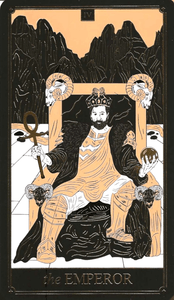

elitarot2strikingly.com
Above all things, Know thyself!
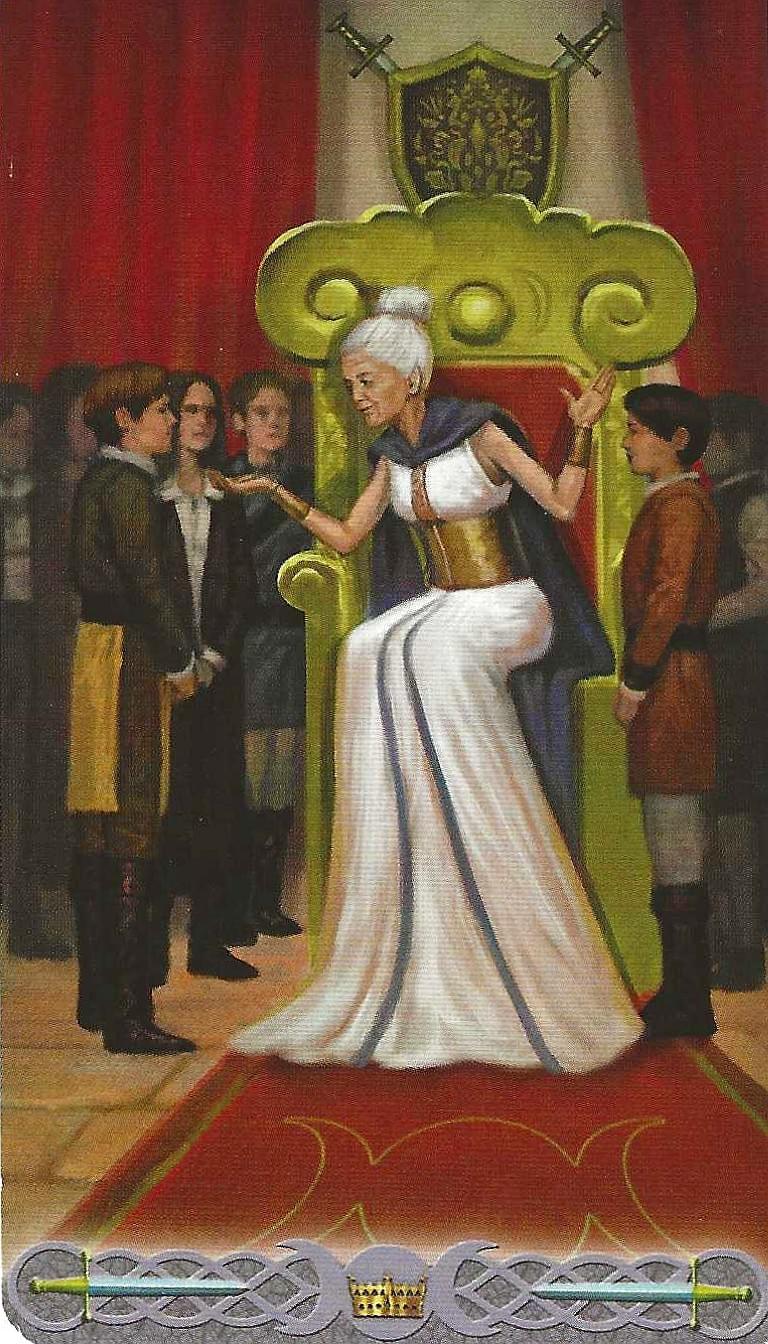
The Triple Goddess Tarot- The Elder (King) of Swords
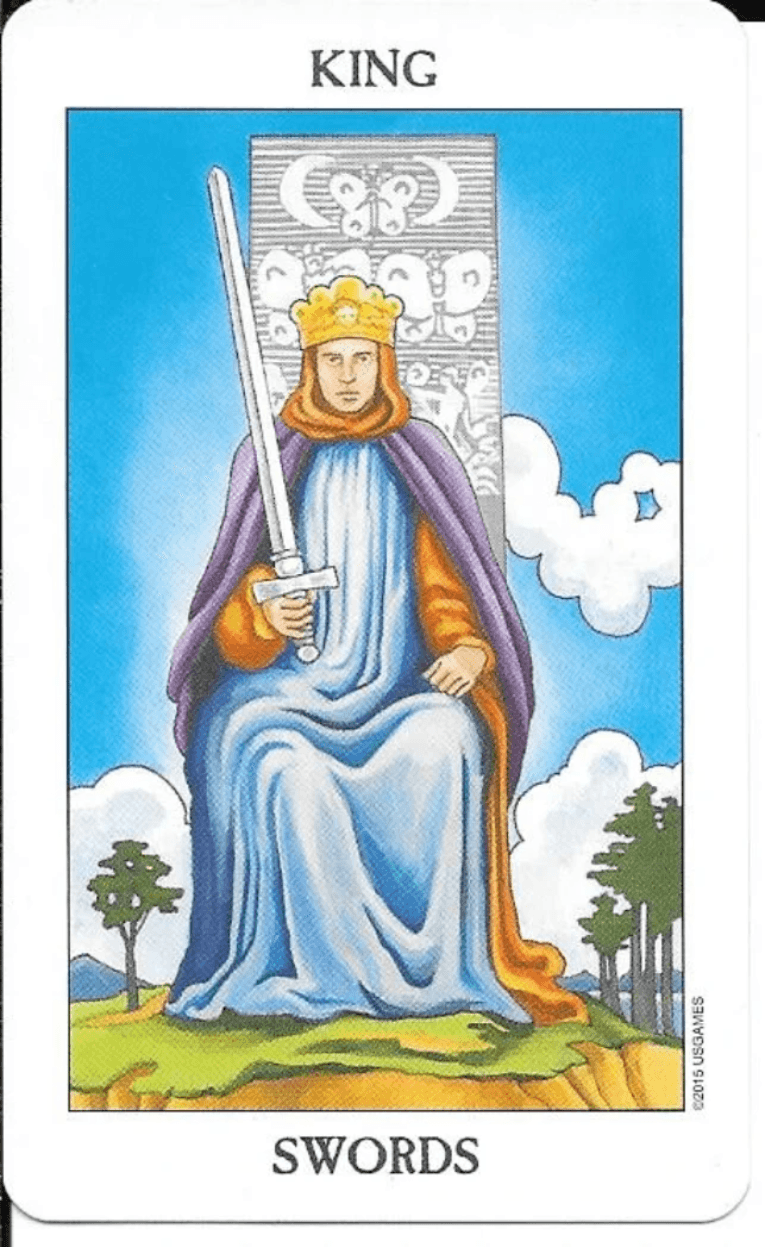
Radiant: Rider-Waite-Smith Tarot- King of Swords
Rider-Waite-Smith King of Swords
A Western Hermetic Qabalistic, Parapsychological, and Metaphysical Comparison
The Rider-Waite-Smith King of Swords and its more traditional Tarot relatives present a more restrained and prosaic image than many modern Western Hermetic decks. Yet that simplicity should not fool us. Beneath the medieval courtly form lies an important doorway into Hermetic Tarot symbolism. The card may appear outwardly sober, even static, but it quietly conveys profound teachings about mind, authority, force, and the rulership of consciousness.
In the Rider-Waite-Smith image, the King is seated in a commanding posture and appears larger than the surrounding landscape. This is not merely artistic emphasis. In the language of Tarot symbolism, such enlargement implies the magnitude of presence, mind, and dominion. He is not only a man seated on a throne; he is the image of intellect enthroned. His consciousness has become structural, deliberate, and central. He rules by mental command, discrimination, and imposed order.
From a Western Hermetic point of view, the King of Swords is not simply an intelligent or stern personality. He represents the fiery aspect of Air: the active will within the mental sphere. This is why the coloration of the Rider-Waite-Smith card is so meaningful. The sky-blue garment reflects the elemental quality of Air, consciousness, and the clear field of thought. Over this is the red-orange inner cloak, suggesting the ignition of will, passion, and directed force within the airy realm. This is not passive thought; it is thought set into command. The purple outer cloak further emphasizes rulership, nobility, and dominion. Purple has long signified authority, spiritual sovereignty, and the dignity of command. Thus the King’s vestments quietly reveal his nature: Air set aflame by will, crowned by sovereignty.
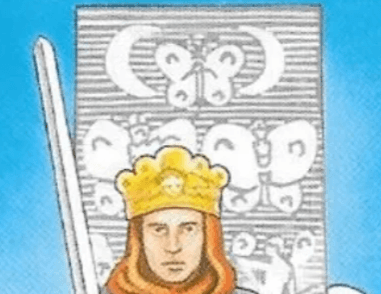
Even the throne symbolism deserves attention. The small winged or insect-like forms, often interpreted as moths or airy beings, suggest his association with the subtle inhabitants of the Air element, the sylphs. Whether taken literally or symbolically, this detail reinforces the fact that this King rules the realm of mentality, communication, pattern, language, and invisible influence. He is the governor of the unseen architecture through which ideas move and shape the world.
However, unlike the far more dynamic and explicitly esoteric kings of the Thoth Tarot and other Hermetic decks, the Rider-Waite-Smith King of Swords does not radiate obvious movement. He appears stoic, composed, and somewhat passive. His sword is upright, but he does not seem to be advancing. This is one of the most revealing differences between the traditional image and later Western Hermetic renderings. In the RWS card, mental power is presented as judicial, conservative, and defensive. In modern Hermetic symbolism, especially in the Thoth system, the fiery aspect of Air becomes more visibly kinetic, sharper, and more forceful. The mind is no longer merely enthroned; it is shown as actively projecting, cutting, and initiating.
This difference opens a valuable metaphysical reflection. The Rider-Waite-Smith King of Swords represents consciousness once it has established a throne within itself. He is not the first flash of thought, nor the chaotic storm of opinions, nor the confusion of contradictory ideas. He is the mind that has consolidated authority. Yet because he holds the sword in a guarded posture, the card also suggests a defensive attitude. Such a mind may preserve truth, but it may also harden into rigidity. The sword may protect wisdom, or it may defend a fixed identity. Thus the King of Swords can indicate mental mastery, but also mental stubbornness.

In Western Hermetic Qabalah, this figure may be better understood through the Sephirah of Chokmah, the second Sephirah on the Tree of Life. Chokmah is Wisdom, but not wisdom in the sentimental or reflective sense. It is pure dynamic force, the primal outpouring of conscious power. It is the first movement outward from Kether, the first act of directed existence. In the court card structure of Hermetic Tarot, the Kings are attributed to this fiery, initiating potency. They are the Fathers of the suits, the original energizers of elemental expression.
Thus the King of Swords is not merely “a man of intellect.” He is the Will-to-Force in the world of Air. He is the Father of mental energy, the initiating principle behind communication, law, logic, analysis, and command through the Word. Chokmah, as the divine masculine principle, is not male in the ordinary biological sense. Rather, it is the archetype of projection, radiation, and expressive impulse. Its counterpart, Binah, the third Sephirah, is Understanding: the receptive, formative, and structuring principle often called the divine feminine. Together these two form the Supernal Father-Mother polarity of creation. They are not separate beings, but complementary phases of the same divine process.
This is why the Kings and Queens of Tarot are not merely gendered people. They are cosmic functions. The King is the initiating force; the Queen is the will-to-form that receives, shapes, and gives body to that force. In that sense, the King of Swords is the outpouring of mental power, while the Queen of Swords is its formative intelligence and field of understanding. Together they produce the living current of the suit.
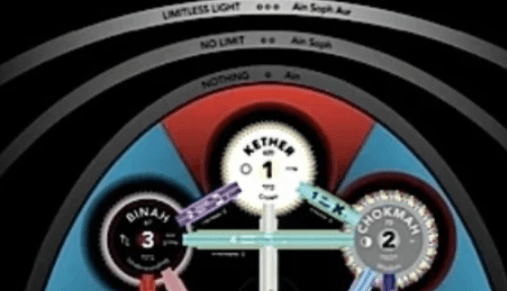
This also explains why Chokmah is reflected in the four Twos of the Tarot. The Twos show the first formulation of force in each elemental world. They are the first visible balancing or expression of the primal energies initiated by the Kings. So the King of Swords stands behind all the mental dualities that emerge later: decision and indecision, truth and falsehood, division and synthesis, command and resistance. He is the originating impulse behind the sword’s function.
From a parapsychological perspective, the King of Swords can be understood as the archetype of directed consciousness. In parapsychology, mind is not always treated as a mere byproduct of the brain, but as a force capable of influence, transmission, impression, and structured intention. The King/Elder of Swords symbolizes precisely this capacity: consciousness that is not drifting, but focused. S/He is the image of mental projection, telepathic precision, strategic clarity, and the disciplined use of thought as force.
A weak or distracted mind diffuses its energy. A kingly mind organizes it. In practical occult and parapsychological terms, this card often points to the capacity to hold a thought-form steadily enough that it becomes causative. This is one reason why the Swords suit is so often misunderstood. It is not simply a suit of conflict or pain. It is the suit of consciousness, and consciousness cuts because it distinguishes. It separates this from that. It defines. It judges. It names. Without this function, no magical act could be precise. No invocation could be correctly directed. No symbol could be clearly received.
Thus, the King of Swords can also represent the disciplined occultist, ritual magician, judge, Elder, strategist, or seer whose power lies in exactness of mind. S/He is the capacity to penetrate confusion, to speak the right word, and to impose order upon psychic chaos. Yet the shadow side is equally important. When intellect becomes severed from compassion, it turns cold, remote, and tyrannical. When the sword is used only to divide, consciousness can become alienated from the living whole. The King may then become overly severe, defensive, or imprisoned by his own certainty.
Metaphysically, this card teaches that reality is not experienced merely through sensation, but through organized perception. The King of Swords represents the structuring power of mind that determines how reality is interpreted. In this sense, he is not simply ruling thoughts; he is ruling the forms through which experience is known. The throne symbolizes that consciousness can become sovereign over itself. But sovereignty requires responsibility. The mind must not merely dominate; it must discriminate in service of truth.
Compared to modern Western Hermetic decks, the Rider-Waite-Smith King is more externalized and socially recognizable: a ruler, judge, or authority figure. In decks such as the Thoth Tarot, the same archetype is made more esoteric and elemental. The Thoth equivalent, the Knight of Swords, is a much more forceful expression of mental energy in motion, because Crowley’s Knights correspond to the fiery part of each element and occupy the place that many other systems assign to Kings. There the energy is more obviously storm-like, aggressive, and dynamic. In the Rider-Waite-Smith King, that fiery air is seated and composed. In the Thoth Knight, it charges outward. Both are true, but they reveal different stages of the same mental current: the enthroned ruler versus the unleashed force.
So the Rider-Waite-Smith King of Swords remains a valuable introduction to Hermetic Tarot because it allows the student to see the symbolic skeleton more clearly. Its simplicity invites contemplation. We see Air clothed in sovereignty, thought held upright in law, and consciousness occupying the throne of judgment. We also see the limits of a mind that protects itself too rigidly. It is a card of wisdom, but wisdom sharpened into command. It is a card of clarity, but clarity that can become severe. It is a card of mastery, but mastery that must remain aligned with truth and not merely personal defense.
In divination, this card often points to a person or state of being marked by intellectual authority, discipline, honesty, strategic perception, and strong judgment. It can indicate one who thinks clearly and acts from principle. It may also show someone whose mental habits have become fixed, guarded, or emotionally distant. Spiritually, it asks whether the querent rules their mind, or whether the mind has become a throne for rigid self-protection.
In the deeper Hermetic sense, the King of Swords asks us to remember that thought is force. The sword is not only a weapon; it is the symbol of discriminating consciousness. The throne is not only a seat; it is the establishment of sovereignty within the psyche. And the King is not merely a ruler; s/he is the image of consciousness becoming authoritative enough to shape reality by precision, intention, and command.
The King of Swords, then, is the Father/Elder of mental force, the Will of Chokmah expressed through Air, and the archetype of mind enthroned in power. In him we are shown both the greatness and the danger of intellect. When aligned with divine Wisdom, he becomes the clear voice of truth. When isolated in self-certainty, he becomes the cold defender of a limited reality. The lesson of the card is not merely to think, but to rule thought in service to the Great Work.
The Triple Goddess Tarot – Elder of Swords
The Crone of Wisdom, Invocation, and the Sovereignty of Mind
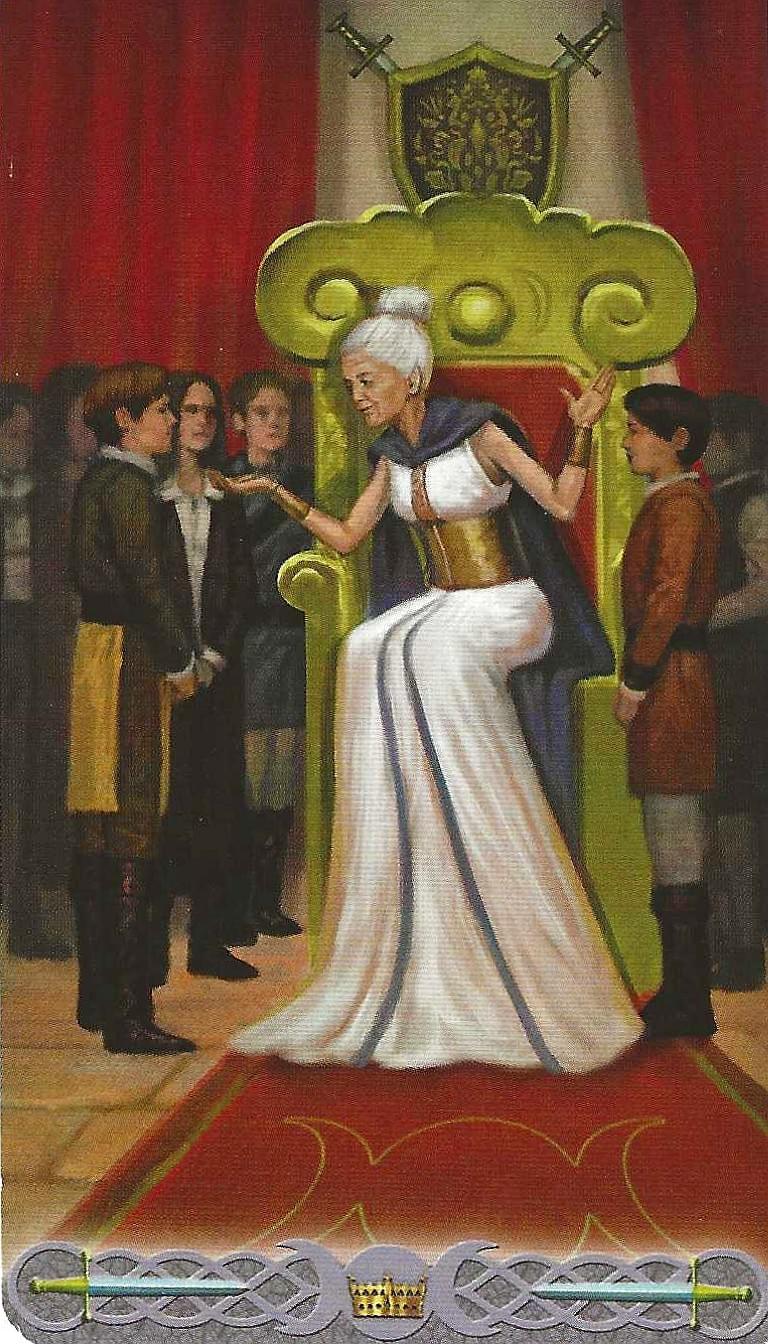
In the Triple Goddess Tarot, the Elder of Swords replaces the conventional masculine King with an Elder woman, the Crone aspect of the Triple Goddess, and this shift is both psychologically and spiritually important. Rather than emphasizing mere authority or stern rulership, this card presents mastery of mind as mature wisdom, earned experience, and the responsible transmission of knowledge.
The Elder is shown teaching school children, which immediately changes the tone of the Sword power. This is not intellect for domination alone, but intellect used to guide, instruct, and awaken clarity in others. She wears a long flowing white gown, suggesting purity of thought, honesty, and mental illumination. Her golden girdle indicates spiritual value, disciplined power, and the capacity to hold wisdom in ordered form. Around her is a purple cape, the traditional color of rulership, dignity, and authority, showing that her power is not accidental but consciously earned. Behind her throne is red fabric, and the floor beneath her is covered in a red carpet inlaid with the golden Triple Goddess moon symbol. This red current suggests active force, directed will, and the fiery charge behind thought itself.
From a Western Hermetic perspective, this is a beautiful image of the awakened mind that not only knows, but knows how to apply knowledge. The swirling energy projected from her outstretched hand strongly suggests invocation, the deliberate calling forth of force through focused thought, speech, and intention. This is a profoundly Hermetic idea. In Western occultism, words are not empty sounds. They are carriers of force. Thought, when concentrated and charged, becomes causative. The Elder of Swords therefore shows that true wisdom is not merely intellectual accumulation, but the ability to direct mental and verbal currents into meaningful action.
This makes her particularly rich from a parapsychological viewpoint. She represents the fact that consciousness can project influence. Her gesture implies that mind is not sealed inside the skull, but radiates outward through intention, language, teaching, and psychic impression.
The children before her symbolize the receptive fields of consciousness, those still learning how to think, discern, and protect their minds from the opinions and projections of others. Thus, one of the card’s central teachings is psychic and mental sovereignty: do not allow others to colonize your thought-world. Know how to think for yourself. Know how to lead with your own clarified ideas.
Metaphysically, this Elder of Swords shows that wisdom is not cold abstraction. It is living intelligence passed from one level of being to another. She teaches that words carry weight, because words are forms of vibration. Speech shapes psyche. Ideas become patterns. Patterns become behavior. Behavior becomes destiny. Therefore, one must take time to think through what one plans to set into motion. This is the magical and metaphysical responsibility of the Sword suit: every mental act is a subtle act of creation.
Compared to the Rider-Waite-Smith King of Swords, this Triple Goddess Elder is less passive, less judicial, and more initiatory in a teaching sense. The RWS King sits in stern authority, embodying the throne of mental law and command. He is the ruler of intellect, but somewhat reserved, stoic, and defensive. The Triple Goddess Elder, by contrast, makes the same archetypal power relational and dynamic. She does not merely hold authority; she transmits it. She demonstrates that wisdom matures into mentorship, and that true genius lies not only in having knowledge, but in knowing how, when, and why to share it.
Qabalistically, this card can still be understood through Chokmah, the sphere of Wisdom, because it represents the active force of mind. Yet the Triple Goddess deck adds a Binah-like coloration to the image as well, because the wisdom here is not only projected, but also embodied, ripened, and maternally conveyed through the Crone figure. So while the RWS King emphasizes rulership and force, the Triple Goddess Elder emphasizes initiated wisdom, seasoned discernment, and the responsible use of mental power.
In divination, this card suggests genius, expertise, thoughtful leadership, intellectual maturity, and the power of words to shape events. It advises the querent to think clearly before acting, to trust earned wisdom, and to refuse the imposition of false opinions from others. It is a card of mental authority, but also of wise instruction. It teaches that the highest function of the Sword is not simply to cut, but to clarify, direct, and awaken.


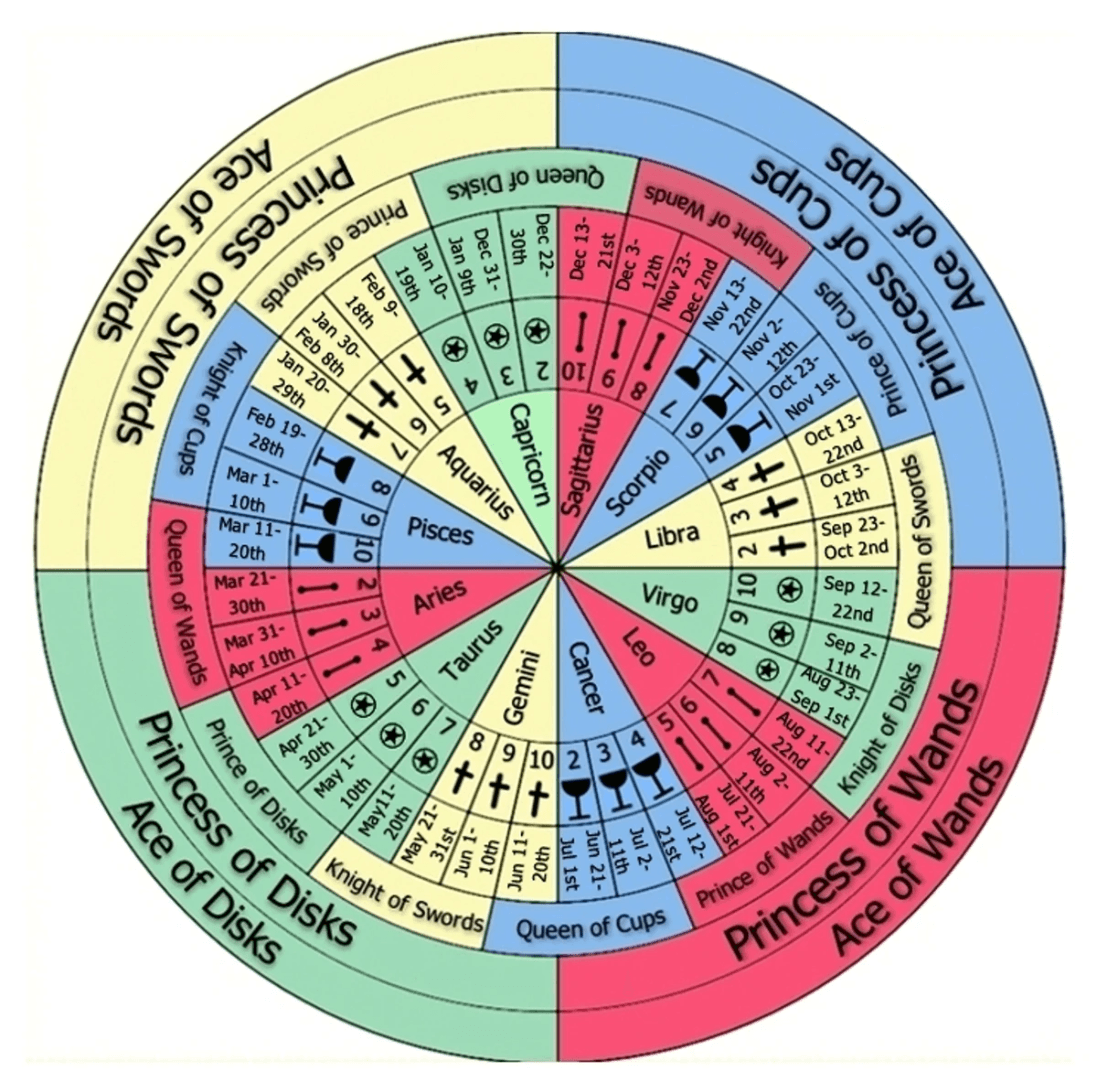
In Western Hermetic Qabalah this King/Elder of Swords card is assigned the Sun in Aquarius. Individuals with the Sun in Aquarius, which is typically from January 20 to February 18, are associated with certain characteristics. It's important to note that astrology provides general traits, and individual experiences may vary. Here are some common characteristics of people born with the Sun in Aquarius:
Innovative and Original: Aquarians are known for their innovative thinking and original ideas. They often enjoy exploring unconventional concepts and pushing boundaries.
Intellectual: They tend to be highly intellectual and have a natural curiosity about the world. Aquarians enjoy engaging in stimulating conversations and exploring new ideas.
Independent: Independence is a key trait of Aquarians. They value their freedom and prefer to follow their own path rather than conforming to societal expectations.
Humanitarian: Aquarians are often drawn to social causes and have a strong sense of social justice. They may actively participate in activities aimed at making the world a better place.
Open-minded: These individuals are open-minded and accepting of different perspectives. They appreciate diversity and are willing to embrace new and unconventional ideas.
Detached: Aquarians can sometimes appear emotionally detached. They tend to approach situations with rationality rather than being driven solely by emotions.
Friendly and Sociable: Despite their independence, Aquarians are generally friendly and enjoy socializing. They value friendships and can be quite sociable in group settings.
Rebellious: There is a rebellious streak in Aquarians, and they may challenge established norms and traditions. They prefer to think outside the box and question the status quo.
Unpredictable: Aquarians can be unpredictable in their actions and choices. They thrive on change and may resist routines that feel too restricting.
Technologically Savvy: With a natural affinity for innovation, many Aquarians are comfortable with technology. They may be early adopters of new gadgets and advancements.
Remember that these traits are generalizations, and an individual's complete astrological profile, including their Moon and Rising signs, provides a more comprehensive understanding of their personality.
WHEN THE KING/ELDER OF SWORDS IS THROWN DURING A READING:
The querent is or may be experiencing:
- The Will to transcend.
- An analytical period, where the power of idea and motion come into play.
- Letting go of old beliefs and attitudes that no longer serve the motion of the individual.
- Tough- minded common sense that is usually based on preconception and prejudice.
- The arrogance of a powerful mind turned on itself in its own desire for control.
- The tendency to judge harshly but with scrupulous fairness.
- A lawyer, senator, or doctor.
- Mastery of creativity and confusion, as he sees new points of view, while brainstorming new thoughts that vent the mind.
- Intellectual, and mental prowess whose only emotion is to control.
- A strong personality of fiery emotion and powerful thought. both stubborn and defensive.
If reversed or ill defined by the surrounding cards, it implies:
- If such occurs, he is incapable of decisions or purpose, and any action he takes is so weakened by his mental indecision that it is easily brushed aside by opposition proving that inadequate violent action is merely futile effort at best.
- He is aloof, cruel, and thoughtless when dealing with others.
Thank you for your interest, your thoughtful comments, subscriptions (free-bottom of blog) and your generous support.
Your donations help keep this work alive and accessible to all sincere seekers.
May your generosity return to you in abundance. May you live long and prosper.
3 Western Hermetic Tarot and Magick websites devoted to helping people become more magic and less tragic since 2010.
Traditional Tarot Card Comparisons blog and tarot layout store.
Home page, Tarot Store, Master Thoth Tarot classes and nontraditional Tarot Card Comparisons blog.
Western Hermetic Magick rituals and invocations and Magick Tarot blogs.
