
#tarotqabalahtraditionalmagickelitarot2strikingly.com
Above all things, know thyself!


Radiant: Rider-Waite-Smith Tarot- Knight of Swords
The Knight / Prince of Swords
Elemental Mind in Motion
In the structure of Tarot symbolism, the traditional Knights correspond to the Princes of the Thoth Tarot. Although the titles differ, they represent the same fundamental principle: the dynamic expression of elemental force.
In the Golden Dawn and Western Hermetic system used by the Thoth Tarot, the Prince represents the active intelligence of the element, the moving mind of the suit. The traditional Knight performs the same symbolic function. Both figures embody the personified elemental force in motion.

These four forces ultimately find equilibrium in Tiphareth on the Tree of Life, the solar center of harmony. Dr. Paul Foster Case described Tiphareth as the “Mediating Intelligence,” the sphere in which the conflicting elemental forces of existence are brought into balance by the Solar Self.

Thus the Knights or Princes represent forces seeking equilibrium, dynamic energies moving toward integration within the consciousness of the individual.
The Rider–Waite–Smith Knight of Swords
The Rider–Waite–Smith Knight of Swords depicts a medieval knight charging forward with sword raised. The background is dominated by sky, clearly emphasizing the Element of Air, which in Western Hermetic symbolism represents consciousness, thought, and the activity of the rational mind.
The trees bend violently in the wind, suggesting turbulence in the mental atmosphere. The knight appears to be attacking an unseen enemy. Symbolically, this implies that the conflict may exist primarily within the realm of thought itself.
This image captures a profound psychological truth:
the mind often battles phantoms of its own creation.

Tilting at Windmills — The Mind Fighting Its Own Phantoms
The phrase “tilting at windmills” originates from Miguel de Cervantes’ Don Quixote (1605). In the story, the knight Don Quixote mistakes windmills for giants and charges them in heroic combat. Despite the warnings of his companion Sancho Panza, he insists on fighting enemies that exist only in his imagination.
The expression has since become symbolic of fighting imaginary enemies or pursuing unrealistic ideals.
In Tarot symbolism this perfectly illustrates the shadow side of the Knight of Swords personality:
the intellect can become so active and so convinced of its own perceptions that it begins to battle illusions produced by the mind itself.
In Hermetic psychology this condition reflects an imbalance in the Air principle, where thought has become detached from grounding influences.
The Metaphysical Psychology of the Knight of Swords
As a personality archetype, the Knight of Swords represents a mind overflowing with ideas. Thoughts move rapidly, often tumbling over one another faster than practical action can follow.
This produces several characteristic qualities:
• intense intellectual brilliance
• rapid reasoning and argumentation
• quick perception and cleverness
• unstable direction of thought
Such a mind may explore many ideas but rarely remains with one long enough to ground it in reality.
In extreme cases the intellect becomes pure ratiocination, thought analyzing thought, detached from experience. Ideas then become formal abstractions rather than living truths, drifting further from the realities that originally inspired them.
The result is a personality capable of generating persuasive arguments for almost anything, while holding few fixed principles.
The mind becomes like a sword flashing in the air—brilliant, sharp, and constantly moving.
The Air Element and the Astral Mind
In Western Hermetic philosophy, Air corresponds to the mental plane, which interfaces directly with the astral world of imagination and images.
The Knight of Swords therefore represents a psyche highly susceptible to mental projections. Ideas, beliefs, and emotional charges may take on such vivid form that they appear as external realities.
From a parapsychological perspective, this archetype often appears in individuals whose mental energy easily shapes the astral field. Such people may become:
• visionaries
• poets
• philosophers
• idealists
Yet the same faculty that allows visionary perception can also produce illusion and self-deception.
Thus, the Knight of Swords stands on a razor edge between genius and fantasy.

The Romantic Idealist
Another aspect of this archetype is the romantic idealist.
The Knight of Swords may see beauty where others see none. The imagination fills the world with symbolic meaning, producing artists, poets, and dreamers. These individuals often possess charm, wit, and intellectual magnetism.
Yet because their vision seeks perfection, they may become deeply disappointed in the imperfections of ordinary life.
When reality fails to match the ideal, the psyche may retreat into fantasy worlds of its own creation, echoing the tragic nobility of Don Quixote.
The Paradox of Certainty
A curious paradox often appears in this personality.
Although the Knight of Swords may depend heavily upon the opinions of others, they simultaneously display great intellectual certainty. Their confidence arises not from stable principles but from the sheer velocity of their thinking.
They believe themselves correct because their mind moves faster than contradiction can fully form.
This is the psychological windstorm symbolized by the Rider–Waite–Smith image.
The Shadow Expression
When unbalanced, the Knight of Swords archetype can become unstable.
Such individuals may move rapidly from one belief system or enthusiasm to another. They may become:
• ideological zealots
• cult followers
• intellectual extremists
• passionate reformers without grounding
The mind pursues ideas as adventures rather than as truths requiring disciplined integration.
In Hermetic terms, the Air element has become detached from Earth, losing stability.
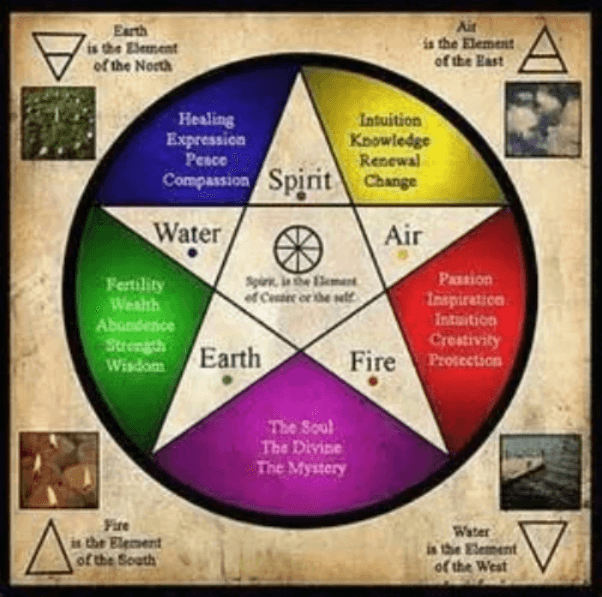
The Four Knights as Elemental Forces
Within Tarot symbolism the four Knights (or Thoth Princes) represent the dynamic movement of the four elements:
Knight of Wands – Fire
Passion, boldness, creative action, and adventurous spirit.
Knight of Cups – Water
Emotional quest, romantic imagination, artistic sensitivity.
Knight of Swords – Air
Intellect in motion, communication, mental courage, and decisive thought.
Knight of Pentacles – Earth
Persistence, practical effort, discipline, and steady material progress.
These four forces represent the active powers of human consciousness, constantly seeking balance.

The Hermetic Perspective
In the Western Hermetic Qabalah, these elemental forces ultimately find equilibrium in Tiphareth, the solar center of the Tree of Life.
Here the fragmented powers of the psyche are harmonized by the Solar Self, the deeper intelligence behind the personality.
The Knights therefore represent energies moving toward integration. They are the forces of life in motion, the dynamic currents of the human psyche seeking balance within the divine center of consciousness.
When guided by the Solar Intelligence of Tiphareth, the charging Knight no longer fights windmills of illusion but becomes a conscious instrument of the Will of the Self.

Triple Goddess Tarot — Knight of Swords
Compared with the Rider–Waite–Smith Knight of Swords
The Triple Goddess Tarot Knight of Swords portrays a knight riding forward on a white charger while holding his great sword upright. The sky is calm and blue, marked by a large yellow cloud. His helmet bears a yellow plume, and the horse is draped with a yellow saddle cloth flowing down over the tall grasses. The knight wears shining armor, and an eagle is embossed upon his breastplate.
At first glance, this image expresses clarity of intention rather than uncontrolled aggression. The sword is raised but not wildly swinging as in the Rider–Waite–Smith image. The posture suggests that the Knight already knows the strategy and now rides forward to carry it out.
Symbolically, the card emphasizes directed thought and purposeful execution.
Western Hermetic Symbolism
In Western Hermetic philosophy the Sword represents the Element of Air, which corresponds to intellect, reasoning, communication, and strategic thought.
The bright blue sky reinforces this association with the mental realm. Blue traditionally symbolizes the clarity of mind and the expansive field of consciousness.
The yellow plume, yellow cloud, and yellow horse covering introduce another Hermetic layer of meaning. In the Qabalistic color scales used by the Golden Dawn, yellow is strongly associated with Air and intellectual illumination. It represents the light of conscious awareness illuminating the field of thought.
Thus the imagery communicates a clear message:
this knight rides beneath a sky of illuminated intellect.

The Eagle Symbol
The eagle on the breastplate adds an important metaphysical dimension.
The eagle traditionally symbolizes heightened vision and the power of perception from above. In Hermetic symbolism it represents the capacity of the intellect to rise above confusion and see the larger pattern of events.
Therefore this Knight does not merely act impulsively. Instead, he operates from strategic vision.
The eagle placed directly over the heart also suggests that the intellect and the will are aligned, producing decisive action.
Psychological Meaning
From a psychological perspective, this Knight represents the mind when it becomes focused and purposeful.
The card implies:
• strategic thinking
• quick intelligence
• blunt honesty
• decisive communication
• the execution of a plan
Unlike slower or more cautious personalities, the Knight of Swords moves rapidly once the idea is clear. When this energy enters a situation, hesitation disappears and the mind begins cutting directly toward the objective.
This can appear as cunning planning or sharp insight, often producing sudden breakthroughs.
Parapsychological Perspective
From a metaphysical or parapsychological viewpoint, the Knight of Swords reflects a psyche whose mental field is highly energized.
Thoughts in such individuals move quickly and may produce sudden flashes of intuitive understanding. Ideas seem to arrive like lightning, giving the impression of creative bursts of insight.
Because thought in Hermetic philosophy shapes subtle reality, the Knight of Swords personality often possesses a powerful capacity to influence events through intention and strategy.
Comparison with the Rider–Waite–Smith Knight of Swords
The Rider–Waite–Smith Knight of Swords presents a very different psychological tone.
In that image, the knight charges violently into a storm. The wind bends the trees and the clouds race across the sky. His sword is raised as if striking at an unseen enemy.
This card emphasizes mental turbulence and impulsive action.
The Rider–Waite knight appears driven by ideas that may not yet be fully formed. The image suggests the possibility of “tilting at windmills,” where the mind fights battles created by its own imagination.
The emphasis is on speed without reflection.
Key Differences Between the Two Cards
Rider–Waite–Smith Knight of Swords
• Stormy sky and violent wind
• Charging impulsively into battle
• Symbolizes aggressive intellect
• Suggests mental turbulence or reckless decisions
• Often warns against acting before thinking
Triple Goddess Tarot Knight of Swords
• Calm blue sky and illuminated cloud
• Sword raised with purpose rather than frenzy
• Eagle symbol of higher perception
• Suggests strategic planning and clarity of thought
• Represents executing a well-considered plan
Hermetic Interpretation
Both cards describe the Air principle in motion, but they show different stages of intellectual development.
The Rider–Waite image reflects the raw force of the mind, quick and brilliant but potentially unstable.
The Triple Goddess Knight represents a more disciplined form of Air, where thought has become organized and directed toward a goal.
In Western Hermetic Qabalah, this distinction reflects whether the elemental force is governed by the Solar intelligence of Tiphareth or left to operate chaotically within the lower psyche.
When the mind is aligned with the deeper Self, the sword no longer swings wildly. Instead, it becomes a precise instrument of will and insight.

Western Hermetic Tarot assigns 21 degrees of Capricorn to 20 degrees of Aquarius to this Knight/Prince of Swords card.
Here is an overview of why—and how—the Thoth Tarot (by Aleister Crowley) assigns 21° Capricorn to 20° Aquarius to the Prince of Swords, which in many other Tarot systems corresponds to the “Knight of Swords.” Because Crowley and the Golden Dawn use a specific esoteric framework—interlinking Qabalah, astrology, and elemental theory—understanding this degree range sheds light on the Prince’s unique blend of energies.
1. Court-Card Renaming in the Thoth Deck
One point of confusion arises because Crowley’s Thoth deck renames and rearranges the court cards compared to the Rider–Waite or older Golden Dawn decks:
- Knights in Thoth = “Kings” in many other decks (the fiery, active aspect of the suit).
- Princes in Thoth = “Knights” in many other decks (the focal or ‘son’ aspect, seated in Tiphareth).
Hence, the Thoth “Prince of Swords” is what you might see as “Knight of Swords” in Rider–Waite–Smith or other Western Hermetic Tarot systems. Despite the different titles, the esoteric attributions remain consistent: this card rules a specific 30° slice of the zodiac—21° Capricorn to 20° Aquarius.
2. Why 21° Capricorn to 20° Aquarius?
Golden Dawn’s 30° Segments
Following the Golden Dawn approach, each of the 16 court cards typically governs a 30° arc of the zodiac. Within the suit of Swords (Air), one of those arcs stretches from the final decan of Capricorn (21°–30°) into the first two decans of Aquarius (0°–20°). Crowley retained this zodiac mapping but adjusted the card’s naming convention to fit his Thelemic/Qabalistic vision.
Astrological Rationale
Capricorn (21°–30°)
- Ruled traditionally by Saturn. This late-decante energy is intense, strategic, and disciplined—like “steeled Earth.”
- Symbolizes the tail end of a cardinal Earth sign, so it’s poised to shift into Air.
Aquarius (0°–20°)
- Also co-ruled traditionally by Saturn (modern astrology adds Uranus).
- Introduces the airy qualities of reason, invention, and an idealistic vision.
- Moves away from purely material or structural concerns toward progressive, intellectual horizons.
Putting these two together, the Prince of Swords (Air of Air) is the link between grounded Saturnian discipline and rapid, innovative Saturn/Uranus intellect. Crowley’s key insight is that this card channels the old guard’s practicality (Capricorn) fused with the forward-thinking rebelliousness of Aquarius.
3. Qabalistic Context: Tiphareth and “Air of Air”
In the Thoth system (which draws heavily from Golden Dawn Qabalah):
- Each Prince (or “Knight” in some decks) represents Tiphareth, the heart/sun center on the Tree of Life. Tiphareth merges and harmonizes energies from above and below.
- Swords is the suit of Air—intellect, logic, communication.
Thus, the Prince of Swords is the “Air of Air” at the Tiphareth level: a strong mental force that attempts to unite reason with clarity and balance. Because Tiphareth sits in the middle of the Tree of Life, the Prince of Swords can manifest the dynamic interplay between structure and freedom, old forms and new ideas.
4. Symbolic and Practical Takeaways
Disciplined Yet Visionary Mindset
- Capricorn’s final decan brings tenacity and structure;
- Aquarius’s first two decans inject inventiveness and intellectual brilliance.
Saturn’s Dual Role
- As the ancient ruler of both Capricorn and Aquarius, Saturn suggests mastery, karma, and boundaries.
- This card can indicate mental tests (Saturn’s “lessons”) but also the power to reorganize or transcend old limitations (Aquarius’s progressive lean).
Intellectual Alchemy
- Moving from an Earth sign (Capricorn) into an Air sign (Aquarius) hints at an alchemical shift from dense practicality (Nigredo) toward a more refined and liberated perspective (Albedo).
- The Prince of Swords channels that transitional energy into incisive thought and decisive action.
Challenges
- Can be overly sharp or critical if unbalanced (the “shadow” of Air).
- May struggle with consistency: bridging earthy realism (Capricorn) and airy idealism (Aquarius) requires ongoing integration in Tiphareth.
5. Working with the Prince of Swords Energy
- Meditation & Pathworking:
Visualize yourself at the cusp between two worlds: the earth-laden fortress of Capricorn opening into the broad skies of Aquarius. Envision the Prince of Swords as a guide who wields a sword of insight, cutting through entrenched obstacles to open new vistas. - Ritual & Intention:
- Invoke Saturn for discipline if your thoughts feel scattered.
- Invoke Uranus for a breakthrough if you feel mentally boxed in.
- Blend the two for balanced, inventive problem-solving.
- Shadow Integration:
- Watch for cynicism, excessive criticism, or mental restlessness.
- Ground your airy impulses in deliberate action (Capricorn’s persistence).
Conclusion
When the Thoth Tarot assigns 21° Capricorn to 20° Aquarius to the Prince of Swords, it highlights the synergy of methodical Earth energy (Capricorn) and revolutionary Air energy (Aquarius)—all under Saturn’s watchful eye, with a dash of Uranian spark. In Qabalistic terms, this Prince sits in Tiphareth, tasked with creating a balanced, incisive worldview that can cut through outdated limits. For those on a Hermetic or magical path, engaging with this card can foster a bridging of structure and innovation, guiding the mind to harness discipline in service of forward-looking intellectual breakthroughs.

Tarot Personality Birth Wheel (Traditional Knights are Princes on this Wheel- Here Thoth Knights are Kings)
When the Knight / Prince of Swords Appears in a Divination
When the Knight (or Prince) of Swords appears in a reading, it signifies the awakening of powerful mental force. The Element of Air is moving rapidly within the psyche, producing ideas, strategies, and the urge to break through limitations.
This card often indicates the need to release creative and intuitive thought, cutting through barriers that obstruct intellectual or imaginative expression. The mind seeks freedom to explore, question, and penetrate illusions.
However, the Knight of Swords energy moves extremely fast. Thoughts may race ahead of practical reality. For this reason the card may advise slowing the mental process, allowing ideas to develop with clarity before acting upon them.
The card may also represent:
• a young or youthful personality driven by ideas
• someone who avoids emotional confrontation by retreating into thought
• reacting too strongly to the opinions or expectations of others
• a mind seeking intellectual independence
In this phase the psyche is attempting to assert its own understanding of truth.
When the Mental Force Is Focused
If the querent has learned to discipline and concentrate the mind, the Knight of Swords becomes a far more powerful archetype.
In this case the card suggests a person who:
• is determined to live according to their ideals and philosophy
• examines beliefs with intense intellectual energy
• possesses keen insight and penetrating intelligence
• may demonstrate strong business judgment or strategic ability
• excels in debate, reasoning, and the “war of wits”
This personality is often brilliant, courageous, and mentally fearless. Their intellect cuts directly to the core of a problem.
When balanced, this card represents mental mastery in action.
Reversed or Ill-Dignified Expression
When reversed, or when surrounded by poorly dignified cards, the Knight of Swords may represent an unbalanced or misdirected intellect.
The querent may display:
• extravagance or reckless enthusiasm
• impulsive decisions made without reflection
• a charming yet careless personality
• excessive rationality that ignores emotional realities
• hasty judgments and short-sighted thinking
In this condition, the mind becomes too sharp and too fast for its own wisdom. Communication suffers because subtle emotional cues and deeper human concerns are overlooked.
The sword cuts, but without understanding the consequences.
Hermetic Insight
In Western Hermetic philosophy, the Sword represents the discriminating power of consciousness. It divides truth from illusion.
When guided by the deeper Solar intelligence of Tiphareth, the Knight of Swords becomes a champion of truth, insight, and intellectual courage.
But when separated from that center of balance, the mind may begin fighting imaginary enemies created by its own ideas.
The lesson of this card is therefore the discipline of thought:
the mind must become the servant of wisdom rather than the master of illusion.
Thank you for your interest, your thoughtful comments, subscriptions (free), and your generous support.
Your donations help keep this work alive and accessible to all sincere seekers.
May your generosity return to you in abundance. May you live long and prosper.
3 Western Hermetic Tarot and magick websites helping people become more magick and less tragic since 2010.
Traditional Tarot Card Comparisons blog and tarot layout store.
Home page, Tarot Store, Master Thoth Tarot Classes, and nontraditional Tarot Card Comparisons.
Western Hermetic Magic ritual and invocation website and blog.
