
elitarot2strikingly.com
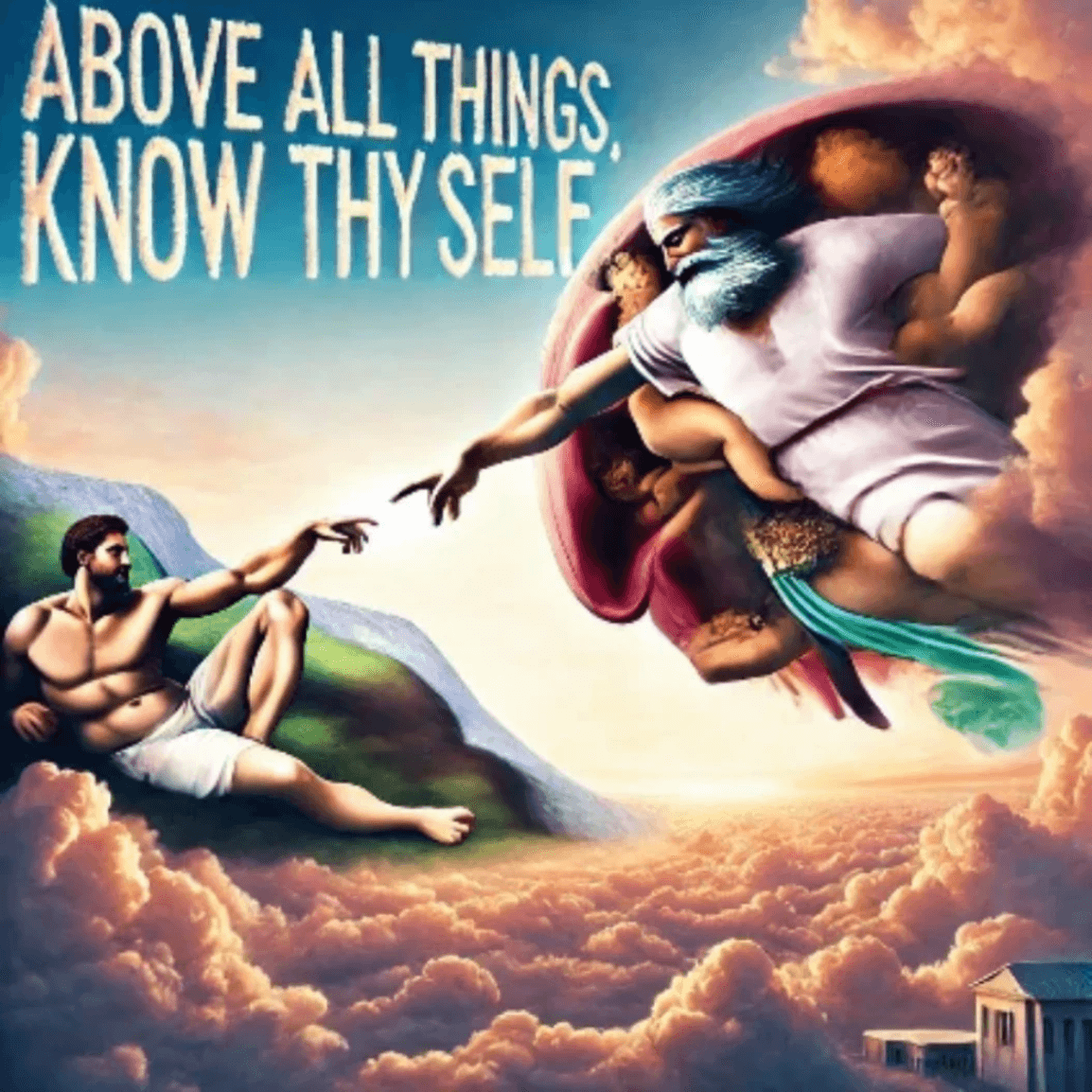
Above all things, know thyself.
[RWS tarot decks and books sold in webstore of elitarot2strikingly.com]
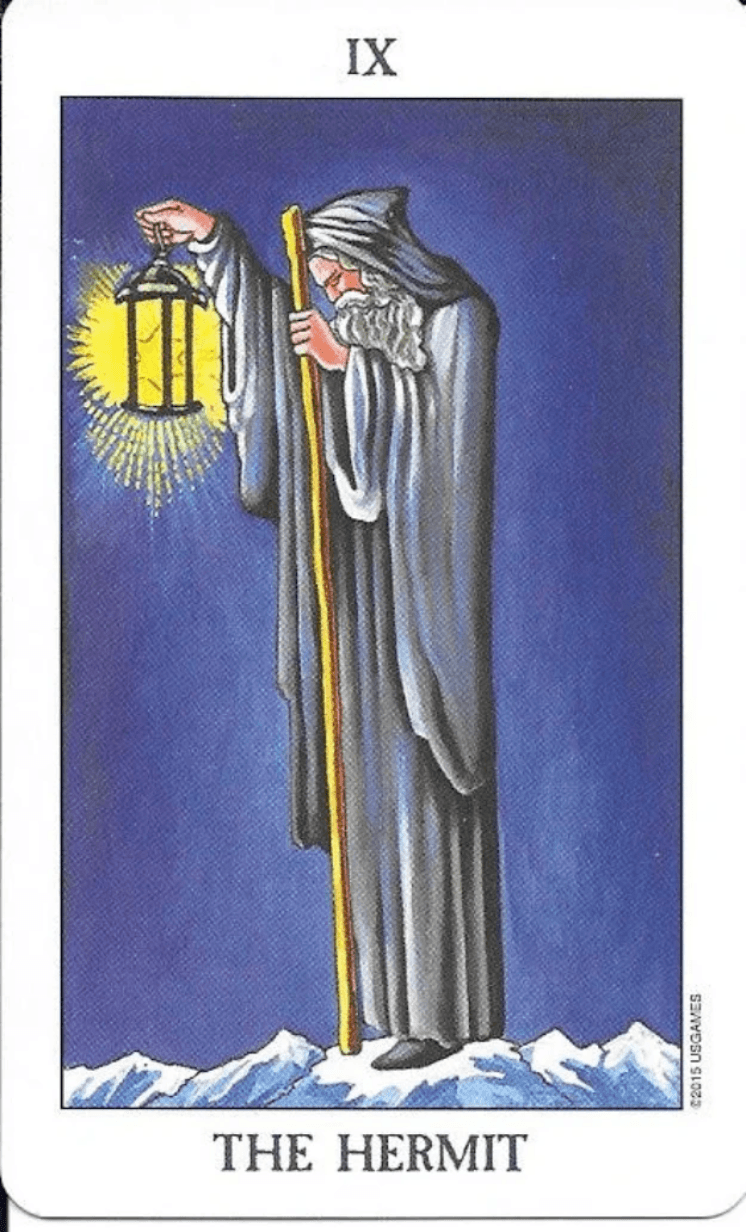
The Rider-Wait-Smith-Tarot-Key 9- The Hermit
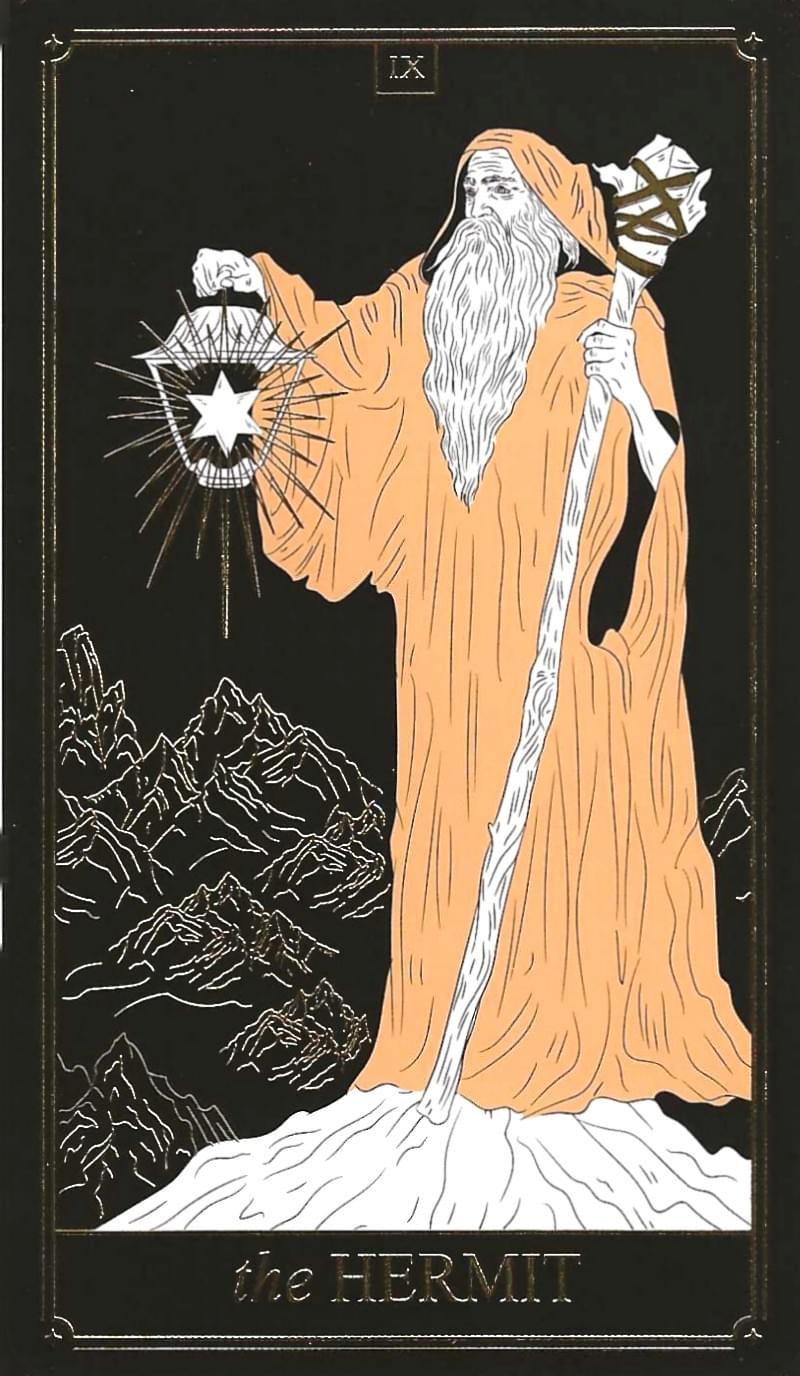
The Wyspell Tarot - Key 9- The Hermit.
Rider–Waite–Smith Tarot—Key IX, The Hermit & Wyspell Tarot—Key IX, The Hermit
The Hermit: The Divine Hand, the Solar Self, and the Light of the Eternal I AM
“Above all things, Know Thyself.”
The Hermit is not merely an elderly gentleman who has decided that humanity is too noisy and moved to the mountains.
Although, after watching the evening news, one might appreciate his decision!
In Western Hermetic Qabalah, Key IX—The Hermit represents the withdrawal of consciousness from the distractions of personality so that the individualized Soul may recognize its relationship with Universal Consciousness.
The Hermit is the keeper of the Inner Light, the guardian of the Divine Seed, and the personification of the wisdom that emerges when the mind becomes sufficiently quiet to hear the voice of the Higher Self.
His solitude is not necessarily loneliness. It is the conscious recognition that the source of enlightenment is already within us.
He is the Way-Shower, the Inner Teacher, and the manifestation of that ancient metaphysical principle:
The Light you seek is the Light by which you are seeking.

Yod
1. The Path of Yod: The Hand of God and the Intelligence of Will
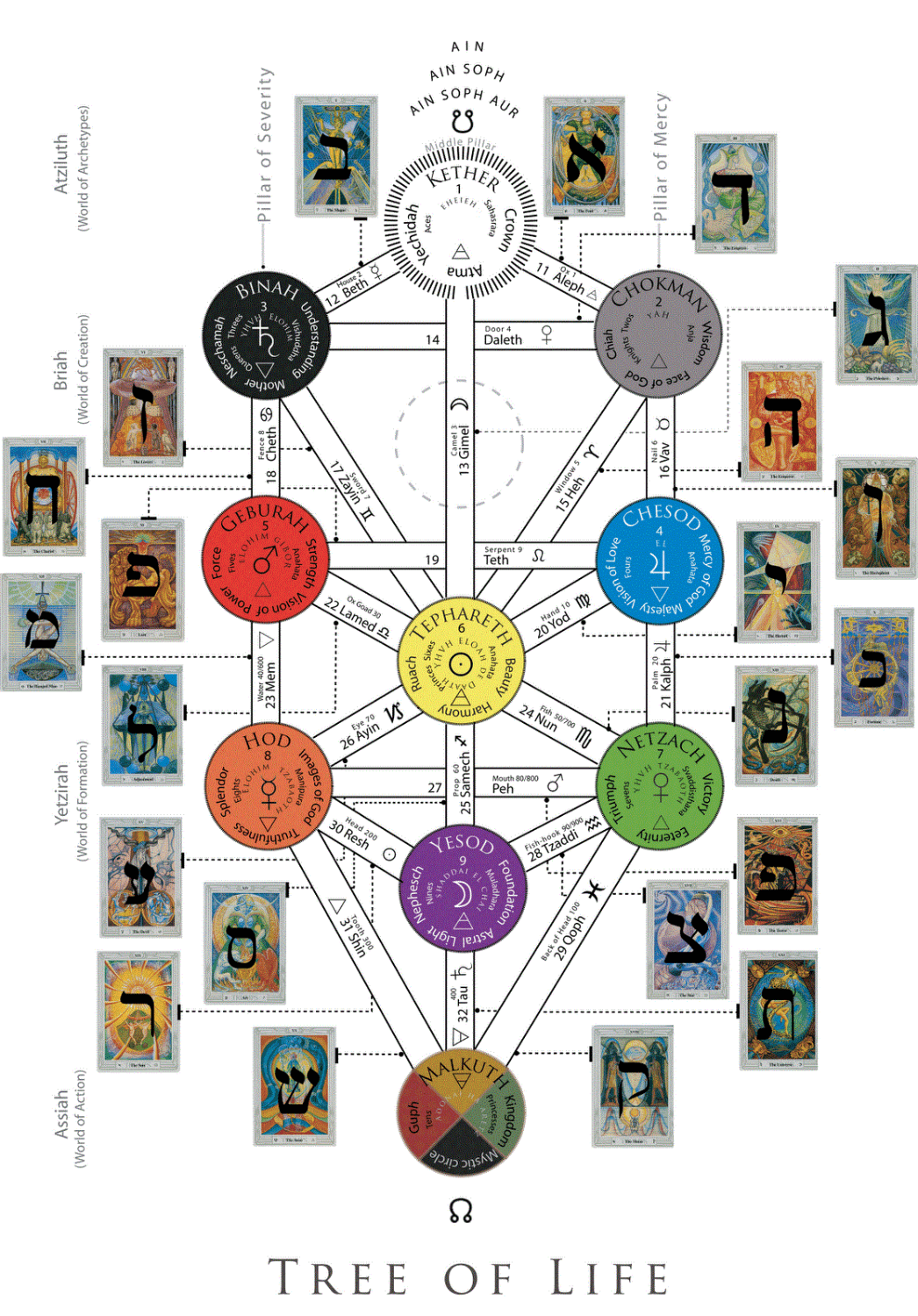
In Western Hermetic Qabalah, the Hermit corresponds to the Hebrew letter Yod (י), meaning Hand.
Yod is assigned to the twentieth path on the Tree of Life, connecting:
Chesed (Mercy): The fourth Sephirah, representing benevolent authority, expansion, and cosmic order.
Tiphareth (Beauty): The sixth Sephirah, representing the Solar Logos, harmony, and the radiant center of the individualized Soul.
This path is traditionally called the Intelligence of Will.
Here, the expansive and ordering power of Chesed is brought into relationship with the Solar Consciousness of Tiphareth.
The result is not merely intellectual knowledge but the development of conscious, purposeful Will.
The Hermit teaches that genuine Will does not originate in the compulsive desires of the personality. It emerges through an increasingly conscious relationship with the Higher Self.
In my Hermetic understanding, Tiphareth is the seat of the Solar Self, intimately related to the Holy Guardian Angel.
Thus, Yod represents the Divine Hand through which higher intelligence becomes an individualized expression of Will.
Yod: The Seed of Manifestation
Yod is the smallest letter of the Hebrew alphabet, yet it carries tremendous symbolic importance.
It is the first letter of the sacred Tetragrammaton, YHVH (יהוה).
In the Hermetic interpretation of this Divine Name, the initial Yod represents the primordial masculine or projective principle, traditionally associated with Chokmah—Wisdom.
The remaining letters express successive stages through which creative power receives form and becomes manifest.
Yod is therefore the seed of manifestation.
A seed contains tremendous potential, but its potential must undergo transformation before it becomes an observable organism.
Similarly, the Solar Self carries the potential for conscious spiritual expression, but that potential must be cultivated through the experience of embodiment.
The Hermit is the Divine Seed becoming conscious of itself.
The Hermit's relationship with Yod is also reflected in the traditional image of his bent, solitary figure, whose posture can be contemplated as a visual expression of the Hebrew letter.
Kether, Chokmah, and the Primordial I AM
In Qabalistic symbolism, the upper point of Yod may be contemplated as an indication of Kether, the Crown, while the body of the letter expresses the primordial creative power associated with Chokmah.
Kether represents the first emanation of the Unmanifest into the possibility of Being.
Chokmah represents the dynamic Wisdom through which this primordial potential begins to express itself.
Tiphareth, the Solar Center, becomes the harmonizing focal point through which the individualized consciousness may recognize its relationship with these higher principles.
This brings us to an essential distinction:
The personality asks, “What am I?”
The Solar Self declares, “I AM.”
The personality is continually changing. Its opinions, memories, emotions, social identities, and physical characteristics are subject to transformation.
Yet the experience of Being—the awareness that one exists—provides the foundation upon which these changing identities arise.
The Hermit invites us to investigate that foundation.
Who is the observer of your thoughts?
Who recognizes your emotions?
Who remains present while the personality continually changes?
These are the questions illuminated by the Hermit's lantern.
The Monadic All-Seeing I is the undivided principle of Universal Consciousness. Through the formative matrix symbolized by Mother Binah, this primordial awareness establishes innumerable positions of experience. Each position expresses itself as an individualized I AM, developing identity through the relationships of Spirit, Mind, Emotion, and Matter. The Observer is not fundamentally identical to these changing identities; rather, they are the experiential forms through which the One encounters its own infinite possibilities.
-Magus Eli
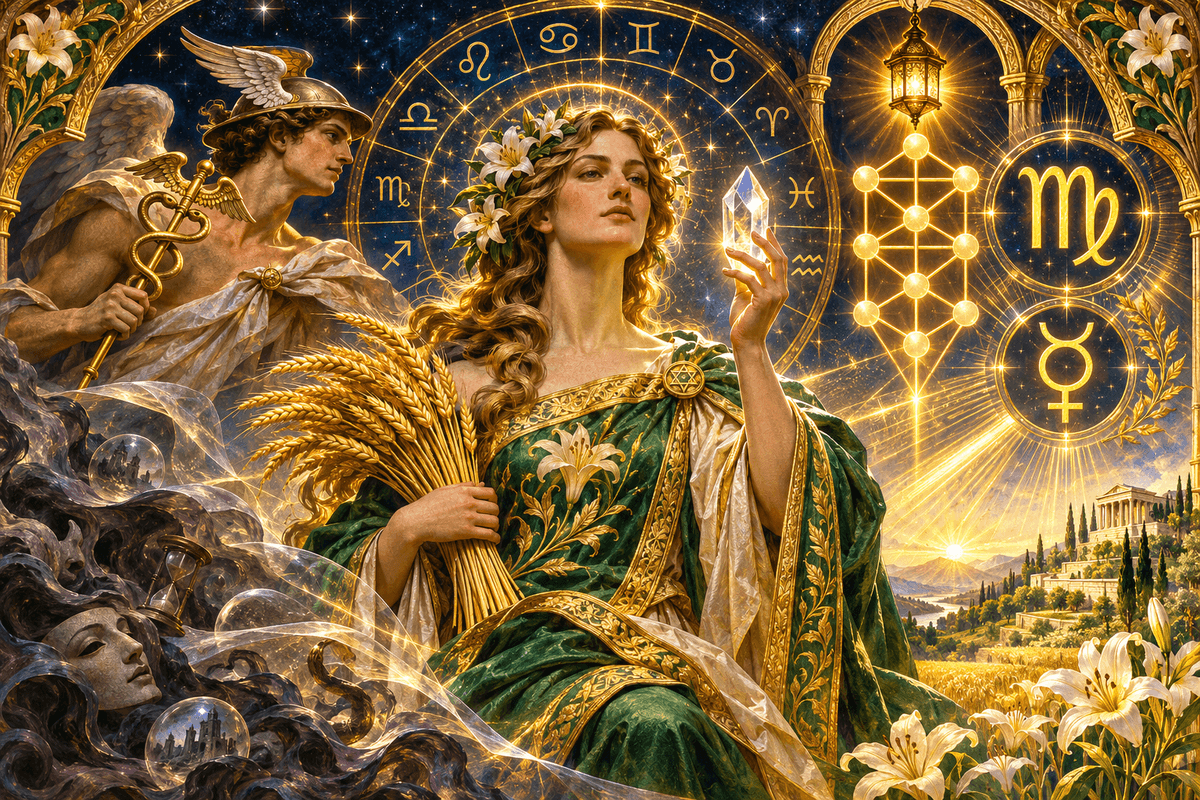
2. Astrology: Virgo, Mercury, and the Sacred Art of Discernment
The Hermit corresponds astrologically to Virgo, the sixth sign of the zodiac.
Virgo is a mutable Earth sign ruled by Mercury.
In traditional astrology, Mercury is also exalted in Virgo.
This double dignity is particularly meaningful in the Hermetic interpretation of the Hermit.
Mercury represents intelligence, communication, adaptability, discrimination, and the capacity to organize experience into meaningful knowledge.
Virgo supplies the practical discipline through which this intelligence becomes useful.
Together, they represent the ability to distinguish genuine knowledge from mental confusion.
The Spiritual Significance of Virgo
Virgo symbolizes the Virgin—not necessarily biological virginity, but the archetypal principle of something complete within itself.
The Virgin is the fertile field of potential, capable of receiving the Divine Seed and bringing it into manifestation.
In this symbolism, virginity represents an undivided state of consciousness rather than moral judgment concerning human sexuality.
The Hermit embodies this inward completeness.
He does not withdraw because he is incapable of relationship.
He withdraws because he understands that genuine relationship requires self-knowledge.
One cannot consistently offer another person the Light of Consciousness while remaining entirely unaware of one's own inner darkness.
The Mercurial Intelligence
Mercury governs the analytical capacity of the mind.
At its highest expression, this faculty becomes discernment.
At its lowest expression, it becomes excessive criticism, anxiety, and endless intellectual activity.
Virgo's shadow is therefore particularly interesting.
The same mind capable of extraordinary understanding can become imprisoned by its own need for perfection.
The Hermit must learn that discernment is not condemnation.
The purpose of self-examination is illumination, not the endless prosecution of oneself for being human.
After all, the Universe did not manifest billions of years of cosmic evolution merely to produce a Virgo who could alphabetize the spice cabinet!
Virgo and the Harvest
Virgo is traditionally associated with grain, cultivation, and harvest.
The symbolism is straightforward but profound.
Knowledge is planted as potential.
Experience provides the soil.
Discernment removes what is unproductive.
Wisdom is the harvest.
The Hermit therefore teaches that spiritual knowledge must become experiential understanding.
An individual can memorize an entire metaphysical library without necessarily achieving genuine self-knowledge.
Knowledge becomes wisdom when it is consciously lived.
3. The Rider–Waite–Smith Hermit: The Ancient One Upon the Mountain
In Pamela Colman Smith's illustration of the Rider–Waite–Smith Hermit, an elderly, white-bearded figure stands upon a snow-covered mountain.
He wears a gray cloak, raises a lantern in his right hand, and supports himself with a long staff held in his left.
The landscape is austere, cold, and seemingly empty.
Yet the Hermit radiates a quiet authority.
The White Beard: The Ancient of Days
The Hermit's white beard evokes the archetype of the Ancient of Days.
In Jewish mystical and Christian theological imagery, the Ancient One represents timeless wisdom and divine authority.
The white beard symbolizes experience beyond ordinary human measurement.
It is not simply the wisdom accumulated through old age.
It represents the deeper idea of intelligence that precedes the individualized personality.
The Hermit is ancient because the principle he represents is primordial.
His human appearance makes the otherwise incomprehensible nature of Universal Consciousness accessible through symbolism.
The Gray Cloak: Concealment and Neutrality
Gray is produced through the relationship of light and darkness.
Symbolically, it suggests neutrality, withdrawal, contemplation, and the reconciliation of opposites.
The gray cloak also evokes the hidden nature of spiritual understanding.
The deepest mysteries of consciousness are not necessarily revealed through spectacular displays of supernatural power.
They may emerge through stillness, attention, and the disciplined observation of oneself.
This is why the Hermit's wisdom is concealed beneath an ordinary cloak.
The most profound spiritual realization may occur without fireworks, thunder, or an angelic orchestra.
Sometimes enlightenment arrives quietly.
And, much to the disappointment of the ego, without a certificate of achievement!
The Mountain: Spiritual Ascent
The snow-covered mountain represents elevation above the distractions of ordinary experience.
In traditional mystical symbolism, mountains frequently serve as meeting places between humanity and Divinity.
Moses ascends Sinai.
Mystics seek remote mountains and deserts.
Shamans withdraw into wilderness.
The Hermit stands upon this universal symbol of spiritual ascent.
Yet the mountain is not necessarily a geographical location.
It represents a transformation in the perspective of consciousness.
From the valley, individual circumstances appear immense.
From the summit, the relationships between those circumstances become more apparent.
This is the psychological importance of perspective.
The Hermit does not necessarily escape life's problems.
He learns to observe them from a more comprehensive state of awareness.
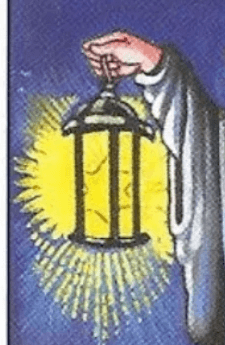
4. The Six-Pointed Star: The Solar Light Within the Lantern
The lantern of the Rider–Waite–Smith Hermit contains a six-pointed star.
This hexagram is one of the great symbols of Western Hermeticism.
Its two interlaced triangles may represent:
Fire and Water.
Spirit and Matter.
The Above and the Below.
The Divine and the Human.
The union of complementary creative principles.
In Western Hermetic symbolism, the hexagram also possesses a strong relationship with solar harmony and the sixth Sephirah, Tiphareth.
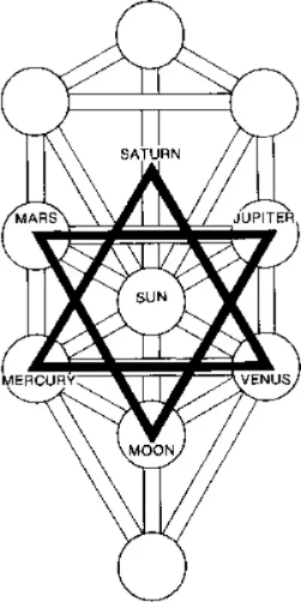
The number six is especially significant because Tiphareth is the sixth Sephirah on the Tree of Life.
The Hermit's lantern can therefore be interpreted as the Light of the Solar Self illuminating the darkness of ordinary perception.
The Holy Guardian Angel and the Inner Sun
Within my understanding of Western Hermetic Qabalah, the Holy Guardian Angel represents an intimate relationship with the Solar Self.
The HGA is not merely an imaginary supernatural visitor who arrives to solve the personality's inconveniences.
It represents a higher ordering intelligence through which the individual becomes increasingly conscious of True Will.
The Hermit's lantern provides a beautiful metaphor for this process.
The lantern does not illuminate the entire mountain.
It reveals the immediate path.
That distinction is important.
Spiritual illumination does not require knowing every future circumstance.
It requires sufficient clarity to take the next appropriate step.
One need not understand the complete architecture of the Cosmos before learning how to behave intelligently today.
The Solar Self illuminates the Way; the personality must still walk it.
5. The Staff: The Directed Will of the Magus
The Hermit's staff represents support, authority, disciplined Will, and the continuity of spiritual practice.
It can also be compared symbolically with the wand of the Magician.
The Magician directs creative energy toward manifestation.
The Hermit directs consciousness toward its source.
These are complementary operations.
The Magician asks:
How shall I create?
The Hermit asks:
Who is the creator?
In this distinction lies a profound metaphysical teaching.
Creative power without self-knowledge can become manipulation.
Self-knowledge without creative expression can become sterile abstraction.
The mature Magus integrates both.
The staff therefore represents the ability to remain centered while consciousness moves between contemplation and manifestation.
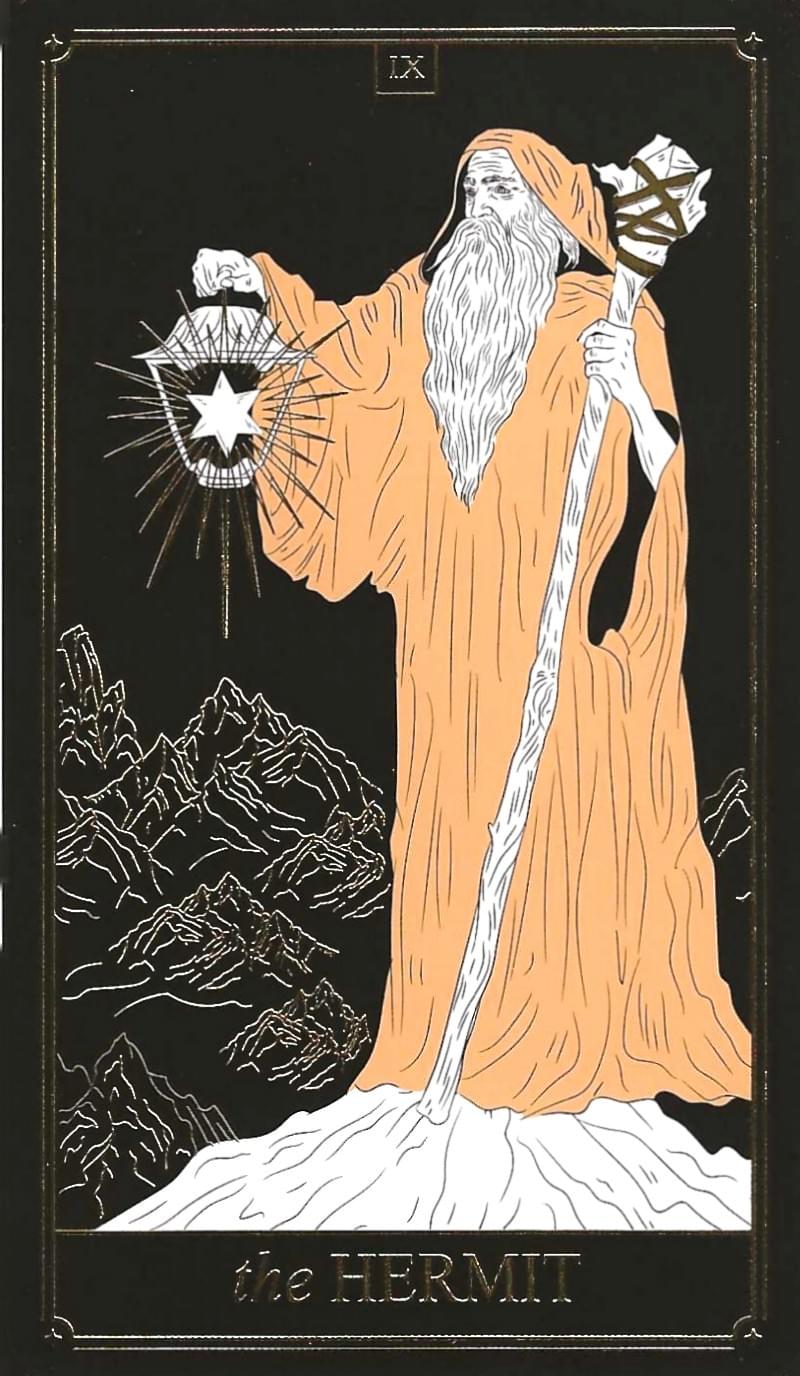
6. The Wyspell Tarot Hermit: The Crystal Staff and the Radiating Star
The Wyspell Tarot preserves the essential symbolism of the Rider–Waite–Smith Hermit while presenting a more visibly radiant figure.
The Ancient One stands upon a mountain peak with a mountain range behind him.
The surrounding landscape is dark, yet the Hermit himself appears bright and clearly defined.
He holds a large staff crowned with a crystal and extends a lantern containing a brilliant six-pointed star.
The Crystal: Consciousness Made Clear
The crystal atop the Hermit's staff introduces an interesting metaphysical symbol.
Crystals possess ordered internal structures.
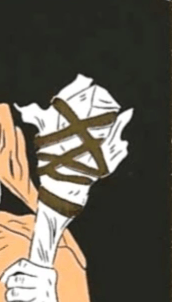
In Hermetic interpretation, this physical characteristic can serve as an analogy for consciousness that has achieved greater internal organization and clarity.
Confused thought scatters attention.
Disciplined attention produces coherence.
The crystal symbolizes the refinement of consciousness through experience, contemplation, and self-understanding.
It is not necessary to assume that the crystal possesses supernatural powers to appreciate its symbolic value.
Its transparent structure offers an effective image of mental clarity.
The aspiring Magus seeks to become similarly transparent to the influence of the Higher Self.
The Radiating Star: Wisdom Shared
The Wyspell Hermit's lantern radiates outward.
This emphasizes the relationship between inner realization and service to others.
The Hermit may discover wisdom through solitude, but wisdom need not remain isolated.
A genuine teacher illuminates possibilities without demanding obedience.
The teacher does not replace the student's inner authority.
Instead, the teacher assists the student in recognizing it.
This is particularly important in the teaching of Tarot.
A Tarot Master does not manufacture another person's spiritual identity.
The purpose of instruction is to provide the symbolic knowledge and practical understanding through which students discover their own relationship with consciousness.
The true teacher does not say:
“Follow me because I possess the Light.”
The true teacher says:
“Discover the Light within yourself.”
A Comparison of the Two Hermits
Symbol | Rider–Waite–Smith | Wyspell |
|---|---|---|
| Hermit | Gray-robed Ancient One | Brightly illuminated Ancient One |
| Mountain | Snow-covered summit | Summit with distant mountain range |
| Lantern | Six-pointed star | Radiant six-pointed star |
| Staff | Simple staff of authority | Crystal-topped staff |
| Atmosphere | Austere contemplation | Mystical illumination |
Spiritual emphasis | : Discovering inner wisdom | . Expressing and sharing inner wisdom |
The two illustrations communicate complementary aspects of the same mystery.
The Rider–Waite–Smith Hermit emphasizes interior withdrawal.
The Wyspell Hermit emphasizes the illumination produced by that withdrawal.
7. The Thoth Tarot Hermit: The Seed of Creation and the Orphic Egg
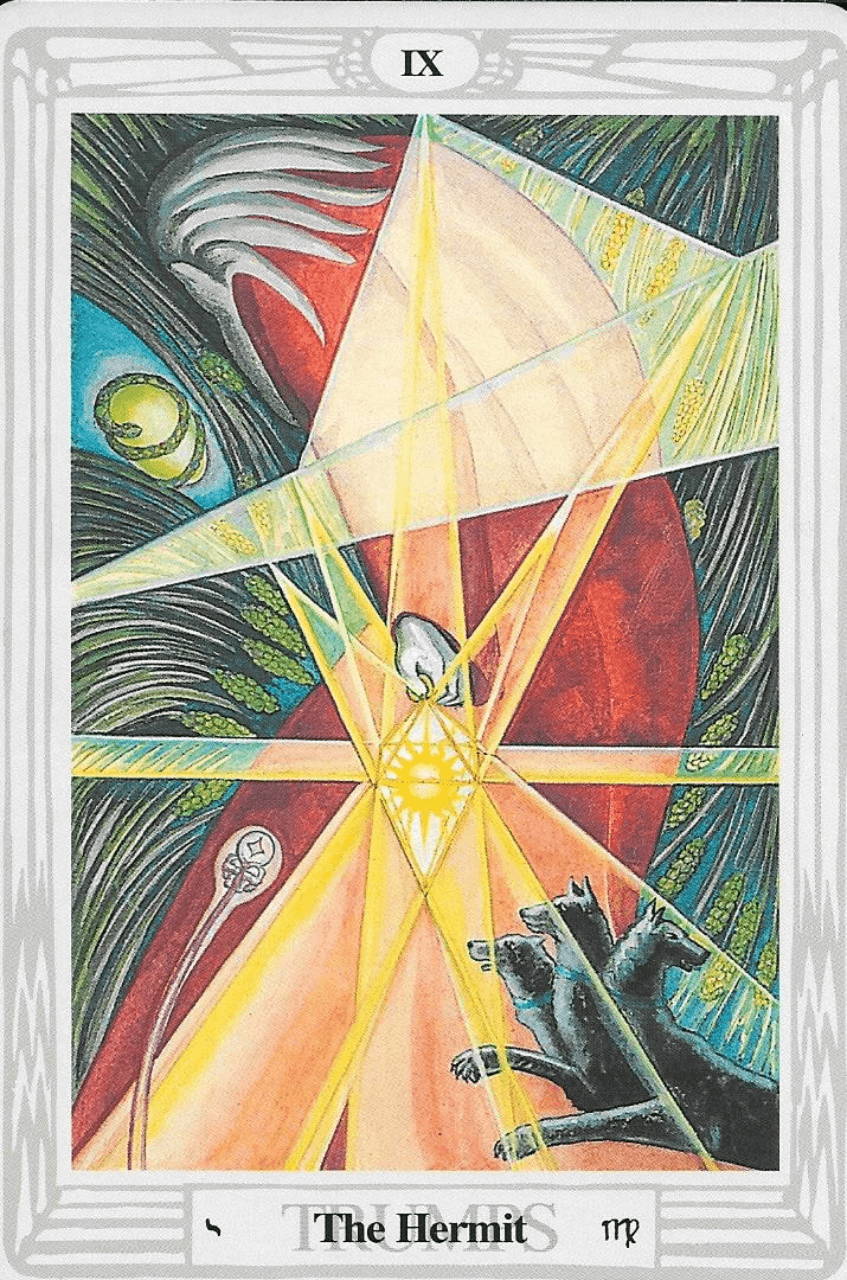
Although our principal comparison concerns the Rider–Waite–Smith and Wyspell decks, Aleister Crowley's Thoth Tarot provides an important additional dimension.
In the Thoth Tarot, Lady Frieda Harris presents the Hermit as a figure associated with the primordial creative seed.
His imagery includes the Orphic Egg, the serpent, a field of grain, and Cerberus, the three-headed guardian associated with the classical underworld.
The egg represents the potential Universe.
The surrounding serpent represents dynamic creative energy and transformation.
The grain expresses Virgo's relationship with fertility, cultivation, and manifestation.
Cerberus suggests that the Hermit has encountered and mastered the forces associated with the hidden depths.
Crowley associates the Hermit's robe with Binah, the Great Mother, within whose formative principle the creative seed is gestated.
This is a magnificent alchemical mystery.
The Hermit represents the concentrated masculine creative principle, yet that principle exists within the receptive matrix associated with the Divine Mother.
Thus, masculine and feminine are not competing biological categories.
They are complementary metaphysical principles of projection and reception.
Every embodied human being participates in both.
The Alchemical Marriage Within the Hermit
The Divine Seed does not manifest without a receptive field.
Fire requires something through which to express its transformative power.
The seed requires the womb.
The idea requires form.
The Will requires a vehicle of manifestation.
The Hermit therefore embodies the mystery of creative potential before its full expression.
He is solitary, yet he contains the possibility of relationship.
He is still, yet he contains the potential for movement.
He is concealed, yet he carries the Light.
The Hermit is the paradox of the One containing the possibility of the Many.
8. Yod, Touch, Sacred Union, and the Ecstasy of Consciousness
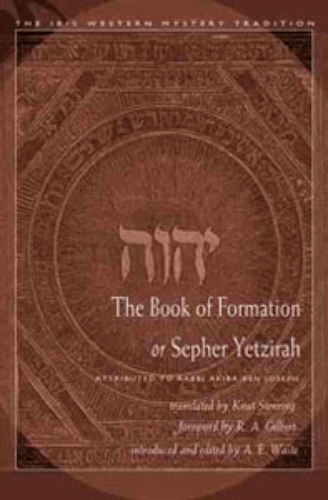
In the correspondences of the Sepher Yetzirah, as interpreted through Western Hermetic Qabalah, Yod is associated with the sense of Touch.
This correspondence introduces an aspect of the Hermit that is frequently overlooked.
The Hermit is not necessarily an advocate of bodily denial.
Rather, he represents the conscious refinement of sensory experience.
Touch is the sense through which apparent separation becomes direct contact.
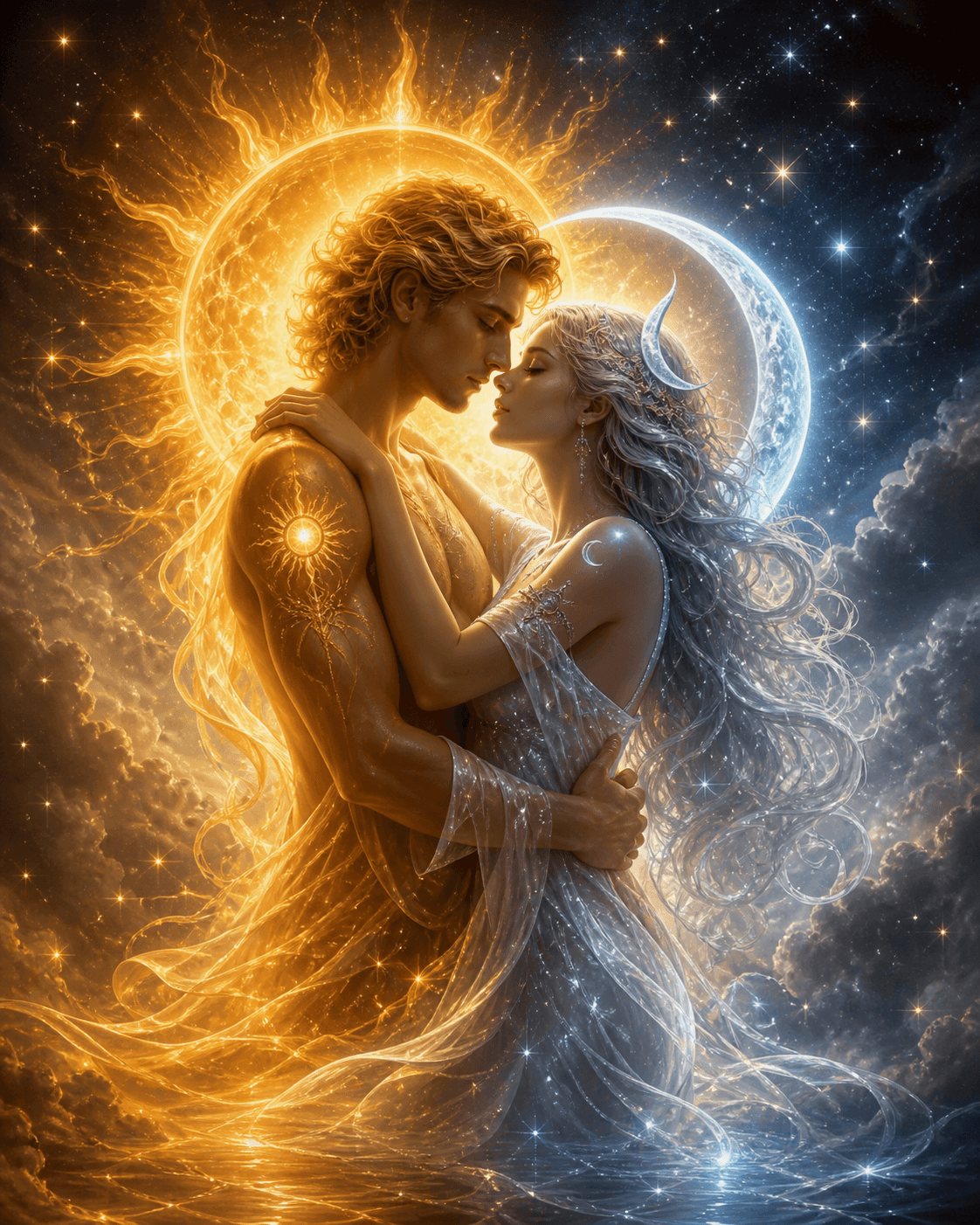
In sacred sexuality, touch can become an expression of emotional intimacy, trust, and the dissolution of psychological isolation.
Mystical literature frequently uses erotic language to describe union with the Divine.
The Song of Songs presents powerful imagery of longing and union.
Rumi employs the language of love and intoxication to evoke spiritual transformation.
St. Teresa of Ávila describes extraordinary experiences of divine intimacy.
These traditions do not establish that mystical union is literally identical to sexual orgasm.
They do demonstrate that bodily and emotional experiences provide powerful metaphors for spiritual ecstasy.
The Body Is Not Profane
In my understanding of Hermetic spirituality, the human body is not a disgraceful obstruction separating Spirit from Divinity.
It is an instrument through which Consciousness experiences manifestation.
The body's senses provide the conditions through which knowledge becomes felt experience.
Emotion is energy in motion.
The Solar Self does not require hatred of the physical body to achieve spiritual awareness.
Indeed, a philosophy that declares the Divine to be omnipresent while simultaneously insisting that the human body is inherently profane creates an interesting theological contradiction.
If everything emerges from the Divine, where exactly does the sacred stop and the profane begin?
At the waistline?
The Hermit encourages conscious embodiment, not compulsive indulgence or bodily shame.
His discipline serves awareness.
It does not require the rejection of pleasure.
The body is the living temple in which the mysteries of consciousness may be experienced.
9. The Alchemy of the Hermit: Nigredo, Albedo, and Rubedo
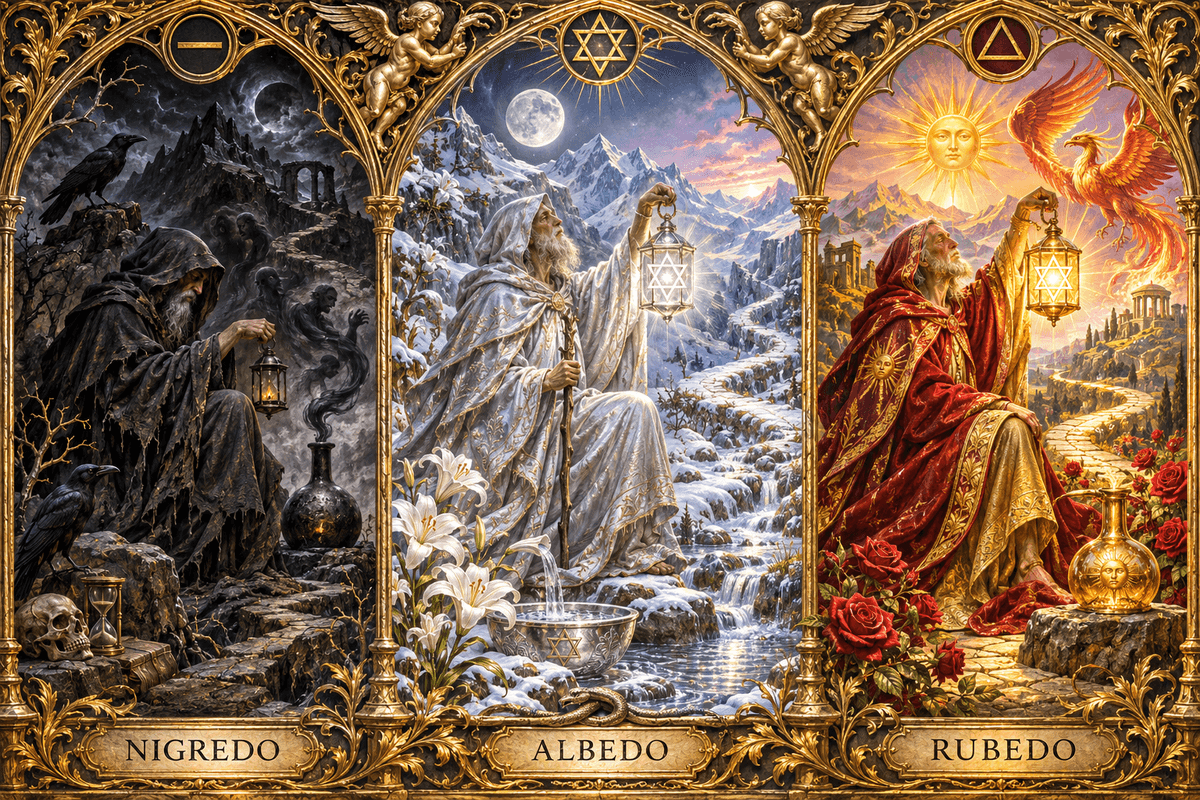
The Hermit's journey can be interpreted through the three familiar stages of the alchemical Great Work.
Nigredo: The Dark Night of the Personality
Nigredo, or blackening, represents dissolution, confrontation with uncertainty, and the breakdown of inadequate psychological structures.
The Hermit enters darkness because familiar explanations no longer provide sufficient understanding.
Old assumptions are questioned.
Habitual identifications become unstable.
The aspirant begins recognizing the difference between consciousness itself and the thoughts that arise within consciousness.
This phase can be uncomfortable.
The personality may interpret the loss of familiar certainty as danger.
Yet the dissolution of an outdated self-image can create the conditions for a more authentic expression of Being.
Albedo: The Light of Discernment
Albedo, or whitening, represents clarification and purification.
The Hermit's lantern becomes especially meaningful here.
Through observation and introspection, previously unconscious patterns become recognizable.
Fear may be distinguished from genuine danger.
Conditioned beliefs may be distinguished from direct experience.
Compulsive reactions may be distinguished from deliberate choices.
This is the purification of perception.
The aspirant begins to recognize:
I experience thoughts, but I am not limited to those thoughts.
Rubedo: The Solar Self-Made Manifest
Rubedo, or reddening, represents the integration of the alchemical work into living expression.
The Hermit does not remain forever upon the mountain.
The wisdom gained through contemplation must eventually become active within the world.
The Solar Self expresses itself through conscious relationships, purposeful work, creativity, and compassionate action.
In this interpretation, enlightenment is not an escape from embodiment.
It is a transformation in the way consciousness participates in embodiment.
The culmination of the Hermit's work is not perpetual isolation.
It is the ability to remain inwardly centered while fully participating in Life.

10. Parapsychology: Intuition, Inner Knowing, and the Silent Mind
The Hermit also provides a useful symbolic framework for examining intuition and unusual experiences of consciousness.
In parapsychological inquiry, researchers have investigated reported experiences such as telepathy, precognition, clairvoyance, and other forms of anomalous knowing.
These remain contested subjects, and no scientific consensus establishes that such experiences demonstrate the independent operation of consciousness beyond the brain.
Nevertheless, the experiences themselves can be examined phenomenologically—that is, through careful attention to how they are perceived and interpreted.
The Hermit represents the cultivation of that attention.
Intuition and Discernment
An intuitive impression may arise before the conscious mind can explain its apparent significance.
Sometimes such impressions reflect rapid, unconscious pattern recognition.
At other times, individuals interpret them within spiritual or parapsychological frameworks.
The important Hermetic question is not simply whether an impression feels extraordinary.
It is whether the individual possesses sufficient self-awareness to distinguish intuition, expectation, fear, imagination, and verifiable information.
Mercury in Virgo demands discernment.
The Hermit asks us to observe carefully.
A powerful intuition does not become more reliable merely because the personality announces it with tremendous confidence.
Otherwise, every impatient gambler would be a prophet!

The Universal State of Consciousness
Within a metaphysical interpretation, the Hermit's withdrawal may symbolize a transition from identification with personal thought to awareness of a more comprehensive field of consciousness.
The ordinary personality operates through memory, language, expectations, and learned patterns.
Contemplative experience can alter the felt relationship between these processes and the observing Self.
Mystics may describe this as expanded awareness, divine union, or participation in Universal Consciousness.
Psychology and neuroscience investigate related experiences through attention, self-referential processing, meditation, and altered states of consciousness.
These are different explanatory frameworks, and their distinctions should be respected.
The Hermit offers a symbolic bridge between them.
Silence is not the absence of intelligence. It can be the condition in which subtler aspects of experience become noticeable.
11. The Cosmology of the Hermit: From Zero to the One and the Many
The Hermit's numerical attribution offers an interesting relationship with the Hermetic idea of manifestation.
Zero represents the unbounded potential traditionally associated with the Fool.
One represents the emergence of a defined principle.
Nine is the final single digit of the decimal system.
It symbolizes completion before the next cycle begins.
This provides a useful analogy for the Hermit.
The Hermit completes a cycle of experience through introspection, integration, and self-understanding.
Yet completion is not annihilation.
It prepares the conditions for further manifestation.
0=2
When Zero Recognized Itself as I AM
Let us consider a metaphysical model in which Universal Consciousness is the Monadic All.
Before differentiation, it contains the potential for every possible experience.
Symbolically, we may imagine Zero becoming aware of its own existence.
The first recognition is:
I.
The affirmation of existence follows:
AM.
Together, they express the primordial recognition:
I AM.
This is a metaphysical analogy, not a historical description of an event in physical cosmology.
From this primordial self-recognition, we may contemplate the One differentiating into countless centers of individualized awareness.
Each living organism becomes an opportunity for Consciousness to experience its own possibilities through unique conditions.
The Hermit represents the reverse movement.
He is the individualized center of consciousness seeking recognition of its source.
The One becomes the Many.
The Many seek awareness of the One.
And the Hermit stands at the meeting place.
The Dark Womb of Creation
The darkness surrounding the Hermit can symbolize the unmanifest potential from which observable forms emerge.
In Hermetic language, this may be contemplated through the mystery of the Supernal Triangle, the Veils of Negative Existence, and the Abyss.
Darkness here is not necessarily evil.
It represents what has not yet become accessible to ordinary awareness.
An analogy can be drawn with the scientific mysteries of dark matter and dark energy, although these are specific physical concepts and should not be equated with the Qabalistic Abyss or Universal Consciousness.
The metaphor remains valuable.
Human knowledge is incomplete.
The observable Universe still contains mysteries.
The Hermit's lantern represents the disciplined illumination of what we do not yet understand.
12. The False Ego: The Shadow That Fears the Lantern
The Hermit presents an important psychological challenge.
Human identity is constructed through memories, emotional associations, cultural expectations, and repeated patterns of thought.
These structures are necessary for everyday functioning.
However, difficulty arises when the personality assumes that its conditioned interpretations represent the totality of the Self.
In my metaphysical language, this distorted identification may be called the False Ego or mind virus.
This should be understood as a metaphor for self-reinforcing patterns of fear, identification, and conditioning—not as a literal parasitic organism.
The False Ego insists:
“You are your fear.”
“You are your past.”
“You are what others think of you.”
“You cannot survive without my constant warnings.”
The Hermit responds by observing these claims.
He does not need to fight every thought.
He learns to recognize thoughts as events occurring within awareness.
Once observed clearly, they need not automatically determine behavior.
The Observer and the Observed
Suppose anger arises.
The conditioned personality immediately declares:
“I am angry.”
The more contemplative perspective recognizes:
“Anger is arising within my experience.”
This subtle distinction creates room for conscious response.
The emotion remains real.
Its physical and psychological effects remain significant.
But identification becomes less absolute.
The Hermit does not destroy the ordinary ego.
He places it into a more appropriate relationship with the observing consciousness.
The personality becomes a functional instrument rather than an unquestioned master.
In Hermetic terms, this is part of the movement toward the conscious expression of the Solar Self.
You are Life experiencing a personality, not merely a personality desperately searching for Life.
13. The Theology of Solitude: The Hidden One Who Is Present Everywhere
The Hermit introduces a theological paradox.
How can the Divine be simultaneously beyond manifestation and present within everything?
In Western Hermetic Qabalah, this question may be approached through the relationship between transcendence and immanence.
The Divine exceeds every form through which it is represented.
Yet existence itself may be contemplated as the expression of Divine Reality.
The Hermit symbolizes both dimensions.
He stands apart from the world.
Yet his lantern illuminates the world.
His isolation expresses transcendence.
His Light expresses immanence.
The Ancient One and the Inner Teacher
The Hermit may also be compared with the archetype of the Inner Buddha, the contemplative sage, and the spiritual mentor.
These comparisons do not make the traditions identical.
Rather, they reveal a recurring human recognition that wisdom requires an inward dimension.
The Hermit invites the aspirant to develop a relationship with the inner teacher without surrendering discernment to external authorities.
This is particularly important for anyone practicing ceremonial Magick.
Ritual may concentrate attention.
Symbols may organize consciousness.
Invocation may express spiritual aspiration.
But none of these practices removes the responsibility to Know Thyself.
The Hermit demands personal participation in the Great Work.
No priest, guru, political leader, or Tarot reader can perform another person's self-realization on their behalf.
Even the most impressive ceremonial robe cannot substitute for genuine understanding
14. The Numerology of Nine: Completion and the Seed of Renewal
Nine occupies a remarkable position in numerical symbolism.
It completes the sequence of single digits before the appearance of ten.
In Hermetic numerology, nine can therefore symbolize fulfillment, gestation, culmination, and preparation for a new beginning.
The Hermit embodies this completion.
He has gathered experience.
He has examined its meaning.
He has begun to distinguish accumulated information from genuine understanding.
Yet his journey continues.
Completion is not stagnation.
It is the foundation for another level of development.
On the Tree of Life, the ninth Sephirah is Yesod, the Foundation.
Although the Hermit belongs to the twentieth path between Chesed and Tiphareth rather than to Yesod itself, the numerical resonance is worth contemplating.
Yesod represents the formative foundation through which subtle patterns are prepared for manifestation.
The Hermit similarly concerns the inward preparation of consciousness.
He gathers the seed of future expression.
The Spiral of Spiritual Development
Spiritual development can be imagined as a spiral rather than a straight line.
A familiar lesson may return at another level of understanding.
The circumstances may resemble those encountered previously, but the observer has changed.
The Hermit therefore represents both completion and renewal.
He withdraws.
He discovers.
He integrates.
He returns.
Then Life provides another opportunity for deeper recognition.
The journey continues because consciousness is not merely accumulating facts.
It is discovering new ways to experience and express its own potential.
15. The Hermit in Relationships, Career, and Material Life
The appearance of the Hermit in a Tarot reading frequently suggests the need to pause, reflect, and examine one's deeper motivations.
The card does not automatically indicate abandonment, separation, or the end of a relationship.
Its meaning depends upon the question, surrounding cards, and circumstances.
Love and Relationships
The Hermit encourages emotional maturity and self-understanding.
It may suggest:
A temporary need for solitude.
Examination of habitual relationship patterns.
Greater honesty regarding emotional needs.
The importance of personal boundaries.
A period of healing or independent development.
In an established relationship, the Hermit may indicate that both partners benefit from recognizing their own identities.
Healthy intimacy does not require the destruction of individuality.
Two conscious individuals may share a profound relationship without demanding that either surrender the right to be a Self.
Career and Purpose
In career readings, the Hermit asks whether the individual's present activities express meaningful personal values.
This may involve:
Reconsidering professional direction.
Seeking additional education.
Developing specialized expertise.
Working independently.
Becoming a teacher or mentor.
Discovering a more authentic sense of purpose.
The Hermit is not opposed to material success.
He simply questions whether success has become disconnected from meaningful living.
Money and Financial Security
In financial questions, the Hermit suggests reflection, research, prudence, and the examination of assumptions.
He may encourage the querent to distinguish material necessities from compulsive consumption.
Money is a practical instrument.
It can provide security, opportunity, and freedom.
But the accumulation of wealth does not automatically produce self-knowledge or emotional fulfillment.
The Hermit understands that possessing more is not necessarily the same as Being more.
16. When the Hermit Appears in a Tarot Layout
I do not require reversed cards in my Thoth Tarot practice.
Every card contains a spectrum of expression, and its constructive or difficult characteristics emerge through the question, placement, and relationship with surrounding cards.
The Illuminated Expression of the Hermit
Introspection and contemplation.
Self-knowledge.
Spiritual maturity.
Independent thought.
Discernment and discrimination.
Patience and self-discipline.
The discovery of inner wisdom.
Recognition of the Solar Self.
Withdrawal from unnecessary distractions.
Teaching and mentoring.
Emotional independence.
The conscious pursuit of Truth.
Reconnection with one's deeper purpose.
The Shadow Expression of the Hermit
Isolation motivated by fear.
Emotional withdrawal.
Intellectual arrogance.
Excessive self-criticism.
Rigidity and inflexibility.
Refusal to accept helpful guidance.
Escapism disguised as spirituality.
Bitterness toward society.
Alienation from meaningful relationships.
Confusing loneliness with enlightenment.
Mistaking personal assumptions for universal truth.
The distinction between constructive solitude and destructive isolation is essential.
Solitude can restore awareness.
Isolation can reinforce fear.
The Hermit teaches us to recognize the difference.
17. The Great Hermetic Lesson: You Are Life
The Hermit's most profound lesson is not that we must abandon society, renounce pleasure, or withdraw permanently into a mountain cave.
It is that consciousness requires opportunities to recognize itself independently of habitual identification.
The Solar Self is not manufactured through introspection.
Rather, introspection creates conditions in which its presence may be more consciously recognized.
The Hermit reminds us that we are not merely collections of social expectations, inherited beliefs, emotional reactions, and temporary identities.
In the Hermetic worldview, the individualized Psyche is an expression of a greater Universal Reality.
The physical body provides the conditions of sensory experience.
Emotion gives movement and experiential significance to knowledge.
The intellect interprets and organizes that experience.
The Solar Self provides the deeper principle of integration and purposeful expression.
These are not enemies.
They are dimensions of the living human experience.
The Great Work is their conscious integration.
The Lantern Is Already Yours
The Hermit does not hand his lantern to the aspirant.
He demonstrates that illumination is possible.
This is an essential distinction.
A spiritual teacher can communicate principles, symbols, methods, and experience.
But the student must transform knowledge into realization.
The Hermit therefore represents the highest purpose of genuine spiritual instruction:
To awaken the individual's recognition of the Light already present within.
And when that recognition begins, the aspirant discovers something extraordinary.
The mountain was never entirely separate from the valley.
The darkness was never proof that Light did not exist.
The personality was never the totality of the Self.
And Life was never something that had to be acquired from the outside.
Final Hermetic Contemplation
I AM the Light that observes the darkness.
I AM the Will that directs my experience.
I AM the Solar Self-expressing through the living body.
I AM not merely the thoughts I think, the emotions I feel, or the names by which others identify me.
I AM the living awareness through which these experiences become known.
Above all things, I shall Know Myself.
The Hermit holds his lantern high, not because he possesses a Light denied to humanity, but because he understands that every seeker must eventually discover the source of illumination within.
And perhaps that is why he stands alone upon the mountain.
He has finally discovered that he was never truly separated from the Whole.
Each man and woman is a star.
The Hermit simply reminds us to stop searching the heavens long enough to recognize our own Light.
Thank you for your interest, comments, and supportive donations.
May you live long and prosper.
Magus Eli
Master Thoth Tarot Reader
The Tarot of Eli 2, LLC
Need Guidance or Have a Question?
Chat with Eli ChatGPT, your dedicated Tarot & Thoth Master Class guide! Whether you're exploring the blog, diving into the Thoth Tarot, or seeking insight into Hermetic Qabalah—Eli is here 24/7 to assist you. Just click the chat and ask!
3 Western Hermetic Magick Websites Helping People become more magick and less tragic since 2010.
Home page, Tarot Store readings page, Master Tarot Classes, Thoth Tarot decks, Book of Thoth and nontraditional Tarot Card Comparisons.
Traditional Tarot Card Comparisons and tarot store with RWS tarot decks and books.
Western Hermetic Magick invocation and ritual website and blogs.
