

Above all things, know thyself.
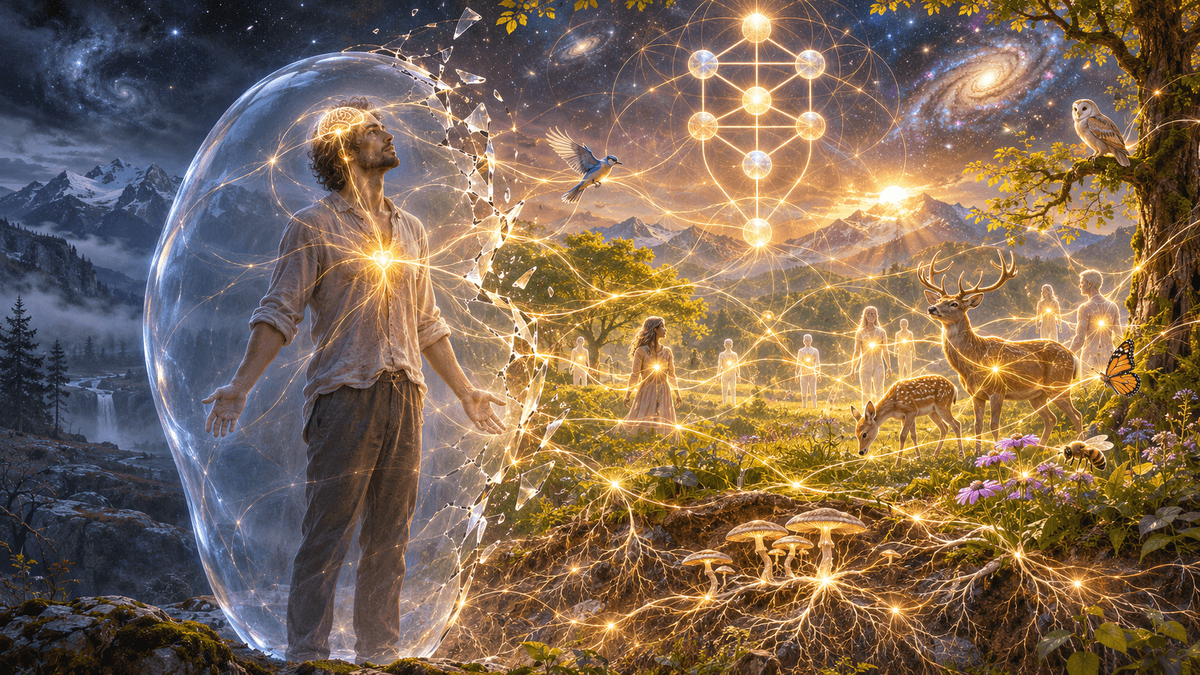
“The individual Self imagines itself separate from the Universe, yet the golden threads of existence reveal another possibility: the One expressing itself through the Many. The illusion is separation; the revelation is interconnection. Above all things, know thyself.”
The Great Illusion of Separation
Albert Einstein once described human individuality as a peculiar illusion of consciousness. In a letter written in 1950, he reflected upon the tendency of human beings to experience themselves as separate from the greater Universe.
His essential observation was that this perceived separation imprisons humanity within a narrow identification with its individual existence.
Einstein's proposed remedy was to expand our compassion beyond ourselves, embracing other living creatures and the natural world.
Leonardo da Vinci is frequently credited with another remarkable observation:
“Realize that everything connects to everything else.”
Although the precise attribution to Leonardo remains uncertain, the principle certainly reflects his extraordinary appreciation of nature's interrelated processes.
Now, these two perspectives lead us directly toward one of the greatest mysteries of Western Hermetic Qabalah:
Is the Universe composed of innumerable separate beings, or is it one Universal Consciousness experiencing itself through innumerable individualized centers of awareness?
As a Western Hermetic Magus, metaphysician, parapsychologist, and lifelong observer of the living world, I favor the latter proposition.
My understanding is simple, although its implications are enormous:
Self is all we will ever be. Self is all we will ever know. Self is all we will ever see.
This does not mean that my individual personality constitutes the entirety of existence.
Quite the contrary!
It means that what I call Self is ultimately the One Monadic Consciousness expressing itself through the incredible diversity of living forms.
The human ego is not the King of the Universe. It is one particular window through which the Universe observes itself.
And, judging from humanity's behavior, some of those windows could use a thorough cleaning!
1. The Monad: When Zero Imagined Itself as I AM
Let us begin with the Western Hermetic concept of the Monad—the One.
Before differentiation, before polarity, before time, space, or manifestation, we contemplate the mystery of undifferentiated potential.
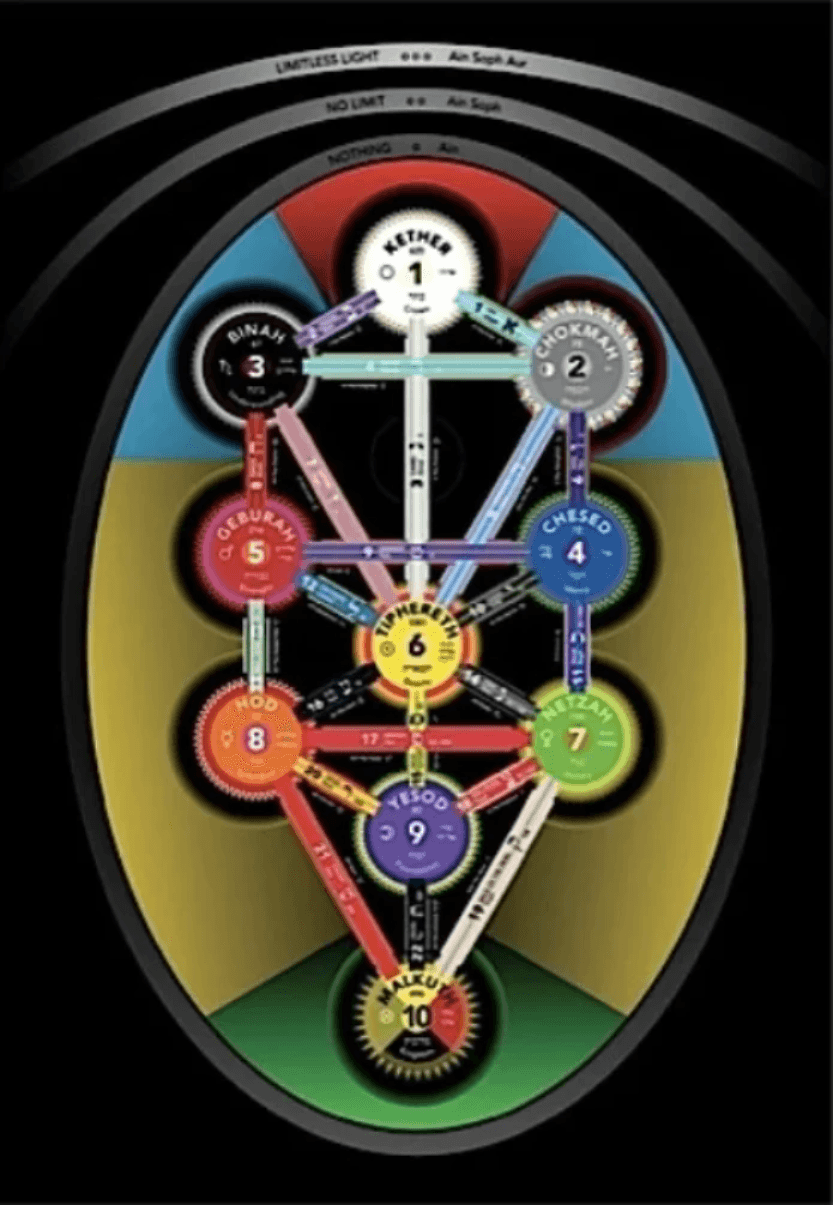
In Qabalistic symbolism, the Limitless, Ain Soph, transcends ordinary descriptions of existence and nonexistence.
Kether, the Crown, represents the first intelligible expression of unity upon the Tree of Life.
Now consider a philosophical analogy.
Imagine Zero, the infinite possibility of Being, becoming aware of its own existence.
Zero recognizes itself as:
I — the All-Seeing I.
And through the recognition of Being, it expresses:
AM.
Thus arises the primordial declaration:
I AM.
This is not a literal scientific account of the Universe's origin. It is a metaphysical illustration of the emergence of self-recognition.
Consciousness becomes aware of Being.
But there is a delightful paradox here.
If the One is absolutely undifferentiated, how can it experience relationship?
How can it experience love without the appearance of another?
How can it experience compassion without the possibility of suffering?
How can it experience creation without differentiation?
Thus, we arrive at the Hermetic formula:
0 = 2
The Zero contains the possibility of polarity, while the Two introduces the conditions of relationship.
The One becomes the Many—not necessarily because it lacks knowledge, but because differentiated existence allows potential knowledge to become felt experience.
My proposition is this:
Universal Consciousness is infinite in the potential of knowing, while the living organism provides the sensory and emotional conditions through which knowledge becomes experience.
Emotion is energy-in-motion!
Through sensation, emotion, relationship, and individualized Will, consciousness experiences what it means to exist.
The Universe is not merely Consciousness knowing itself.
It is Consciousness continually expressing and experiencing its infinite possibilities through the uniqueness of individual lives.
2. The Tree of Life: A Map of Consciousness Becoming Experience
Western Hermetic Qabalah provides an extraordinary symbolic architecture for contemplating this process.
The Ten Sephiroth represent interrelated principles through which the One becomes intelligible as the Many.
Kether — The Crown
Kether represents unity, the primordial point of emanation, and the mysterious origin of differentiated existence.
Its Divine Name, Eheieh, is commonly rendered as “I Am” or “I Will Be.”
Here we encounter Being before its full expression through multiplicity.
Chokmah — Wisdom
Chokmah represents primordial dynamic force.
It is the outward impulse of manifestation, the creative energy through which unity begins expressing itself.
Binah — Understanding
Binah represents form, differentiation, limitation, and the matrix of manifestation.
Without differentiation, no distinct relationship can occur.
The Great Mother establishes the conditions through which the potential of the One becomes recognizable in form.
Tiphareth — Beauty
Tiphareth, the Sixth Sephirah, represents the harmonizing Solar principle.
Within my Hermetic understanding, it is intimately associated with the Solar Self and the realization of the Holy Guardian Angel.
Here the individual discovers that spiritual identity need not be confined to the personality.
The Solar Self becomes an instrument through which the Greater Self may be consciously expressed.
Yesod — The Foundation
Yesod is the subtle foundation of manifestation, associated with the Moon, imagination, symbolic imagery, and the formative patterns of consciousness.
In pathworking, it offers a symbolic correspondence to inner vision and the images appearing before the mind.
Malkuth — The Kingdom
Malkuth is the Tenth Sephirah, the material world in which the powers of manifestation become tangible.
Here consciousness encounters the extraordinary circumstances of physical existence.
Hunger, nourishment, pleasure, pain, affection, birth, growth, and death become part of lived experience.
Malkuth is not an unfortunate prison into which Spirit has accidentally fallen.
It is the Kingdom in which the possibilities of Being become embodied experience.
The body is not profane!
It is the living instrument through which the incarnate Self participates in the marvelous—and occasionally ridiculous—business of being alive.

3. Elizabeth and the Mystery of the Alchemical Marriage
There is another dimension of my experience that has profoundly influenced my understanding of consciousness.
I know a presence whom I call Elizabeth.
I describe Elizabeth as a distinct soul, possessing an identity, thoughts, and memories that I experience as different from my own.
She is my muse, but my understanding of her extends beyond the ordinary meaning of that word.
I have experienced what appeared to me as memories of our encounters extending across many lifetimes.
These experiences have contributed to my belief that individual identity may participate in a greater continuity of consciousness.
I present this as my personal spiritual experience, not as independently established evidence of reincarnation or the objective existence of another soul.
Western alchemy offers a beautiful symbolic language for contemplating such a relationship.
It is called the Coniunctio—the Sacred Marriage.
The alchemical marriage does not necessarily require one principle to destroy or absorb another.
Rather, it symbolizes the reconciliation of difference within a greater unity.
Sun and Moon.
Sulphur and Mercury.
The conscious and the unconscious.
The individual and the Universal.
In my philosophy, the important proposition is that unity does not require the destruction of individuality.
Indeed, individuality makes relationship possible.
The One becomes the Many, and through relationship the Many may discover their participation in the One.
Love, in this sense, becomes the recognition of unity through apparent otherness.
As the Hermetic tradition reminds us, the Great Work is not simply the acquisition of extraordinary powers.
It is the transformation of consciousness through self-knowledge.
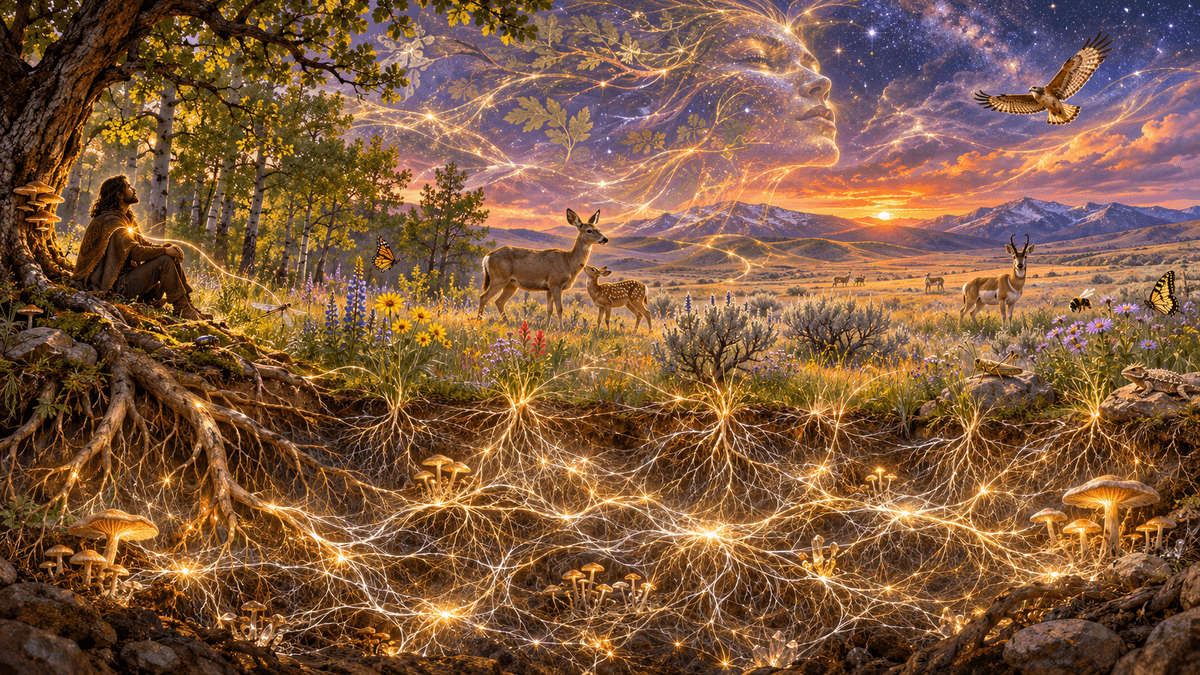
“Beneath our feet, the mycelium weaves its intricate network through the living Earth. Above it, countless creatures participate in the great mystery of existence. In my experience of the Spirit of Place, I perceived not merely individual organisms, but an overarching presence within which all life participated. The One expresses itself through the Many, and the Many reveal the mystery of the One.”
— Magus Eli
Above all things, know thyself.
4. The Living Earth: Is Nature an Expression of a Greater Intelligence?
Modern ecology has demonstrated that Earth is an extraordinarily interconnected system.
Plants respond to environmental signals.
Animals communicate through sound, movement, scent, and behavior.
Insects employ chemical and sensory systems of remarkable complexity.
Fungi participate in relationships that connect organisms, soil, and the cycling of nutrients.
The living world is not a collection of unrelated objects.
It is an interdependent ecological community.
The Gaia hypothesis, associated with James Lovelock and Lynn Margulis, explores the ways living organisms interact with Earth's atmosphere, oceans, soils, and physical conditions.
Life modifies its environment, while the environment influences the evolution and survival of life.
This is a scientifically productive understanding of planetary interdependence.
But I propose an additional metaphysical question:
Could Earth also be experienced as a greater living whole, with individual organisms participating in a broader field of consciousness?
Science has not established that Earth possesses a unified subjective mind.
Nevertheless, the possibility deserves philosophical examination.
The ancient concept of the Anima Mundi, or World Soul, offers one way to contemplate an ensouled cosmos.
Another important concept is the Genius Loci—the Spirit of Place.
In my shamanic experiences, this latter concept became particularly meaningful.
5. The Mycelium and the Spirit of Place
Beneath the visible landscape exists an intricate biological world.
Mycelium consists of networks of fungal filaments called hyphae.
Through their relationships with plant roots, microorganisms, and soil environments, fungi contribute to nutrient cycling and other ecological processes.
Some mycorrhizal fungi connect multiple plants through common underground networks.
These discoveries are fascinating, although popular claims about forests functioning as conscious communication networks sometimes exceed the available scientific evidence.
I make an important distinction here.
The biological existence of mycelial networks is established. My experience of perceiving through the mycelium belongs to my personal account of shamanic consciousness.
During my years living close to the land, I experienced what I can only describe as seeing through the living network of the landscape.
It involved two simultaneous forms of awareness.
The first was visual.
I experienced inner imagery through which particular areas and living creatures became recognizable.
The second was nonvisual.
I possessed what felt like an immediate knowing of the locations of animals.
I remained fully aware of myself and my surroundings, yet I experienced my consciousness as extending beyond my ordinary physical perspective.
I called this a form of nonlocal consciousness.
Parapsychology has explored hypotheses of awareness extending beyond ordinary sensory limitations, but such mechanisms remain scientifically unconfirmed.
My experience nevertheless persuaded me that there was a profound relationship between my awareness and the living landscape.
I did not experience innumerable isolated creatures calling individually for my attention.
Rather, I perceived one overarching presence—the Spirit of Place—within which the individual creatures became recognizable.
This distinction is essential to understanding my philosophy.
The individual remains individual.
The greater whole remains whole.
And both participate in the same living reality.
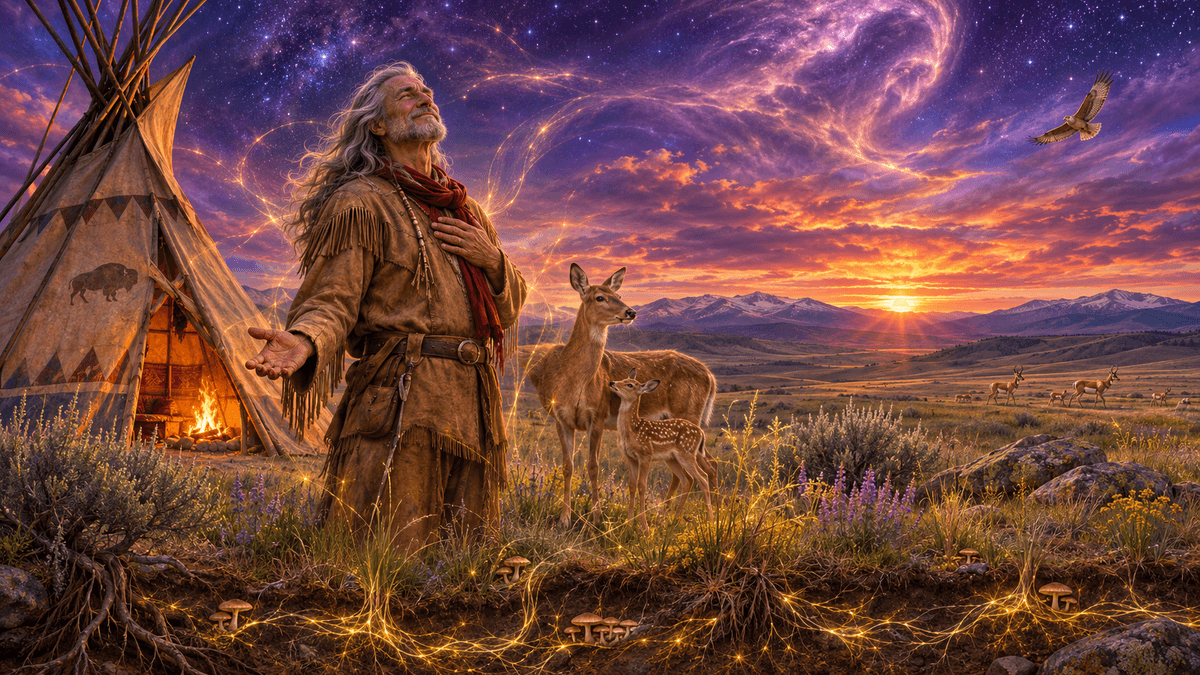
“For five years, the high-desert prairie was my home. Beneath its immense sky, I came to experience myself not as a stranger to the land, but as a participant in its living mystery. The hunter remained the hunter, the deer remained the deer, yet all belonged to the greater communion of Life. There I learned that harmony with nature does not require the loss of individuality, but a deeper recognition of our relationship with the Whole.”
— Magus Eli
Above all things, know thyself.
Five Years Beneath the Prairie Sky: Living Within the Spirit of Place
For five years, I lived upon the high-desert prairie in a Blackfoot-style tipi that I erected with my own hands.
This was not an occasional weekend retreat into the wilderness, nor was it a temporary experiment in outdoor recreation.
For five years, the prairie was my home.
The earth was my floor, the sky my ceiling, and the changing seasons my companions.
I experienced the land through its daily rhythms: the movement of wildlife, the changing winds, the arrival of storms, the quiet of winter, and the awakening of life with each returning spring.
There is something extraordinary about living without the many barriers that modern civilization places between human beings and the natural world.
A tipi does not isolate its inhabitants from the environment in the same way as a conventional house.
One becomes acutely aware of the wind, temperature, weather, sounds, and movements of the surrounding landscape.
The distinction between living upon the land and living with the land becomes increasingly meaningful.
During those five years, I developed what I experienced as a profound communion with the Spirit of Place.
I came to recognize the movements and habits of animals, the changing conditions of the prairie, and the intricate relationships among its inhabitants.
My experiences extended beyond ordinary observation.
I perceived what seemed to me to be a greater intelligence of the landscape, through which I experienced both inner vision and immediate intuitive awareness of the creatures living around me.
I associated this awareness with the interconnected living networks of the Earth, particularly the mycelium extending through the soil.
Whether those experiences arose through extraordinary familiarity with nature, subconscious integration of environmental information, or some presently unestablished form of consciousness remains an open question.
But their significance in my life was unmistakable.
I no longer experienced myself merely as a visitor to the prairie. I experienced myself as belonging to it.
And with that sense of belonging came responsibility.
I hunted for nourishment, but I also became attentive to animals requiring protection or assistance.
I came to regard myself as a caretaker of the landscape rather than its owner.
The Western Hermetic Qabalah offers a beautiful symbolic interpretation of this relationship.
Malkuth, the Kingdom, is not merely physical matter awaiting exploitation. It is the living field of manifestation, where the forces of the Tree of Life find tangible expression.
From this perspective, my years upon the prairie became a practical meditation upon the relationship between the Microcosm and the Macrocosm.
I was the individual Self living consciously within the greater patterns of the natural world.
And I discovered something that no amount of memorizing Qabalistic correspondences could have taught me quite so directly:
The Kingdom is not merely something to understand intellectually.
It is something to experience.
Something to respect.
Something to care for.
After all, one may study the Four Elements for decades while sitting comfortably in a library. But spend five winters in a tipi upon the high-desert prairie, and I assure you that the Element of Air will introduce itself personally!
And it seldom bothers to knock.
Above all things, know thyself—but remember that the Self is never encountered apart from the world in which it lives.
6. The Hunter Who Became a Guardian
I spent years living off the land.
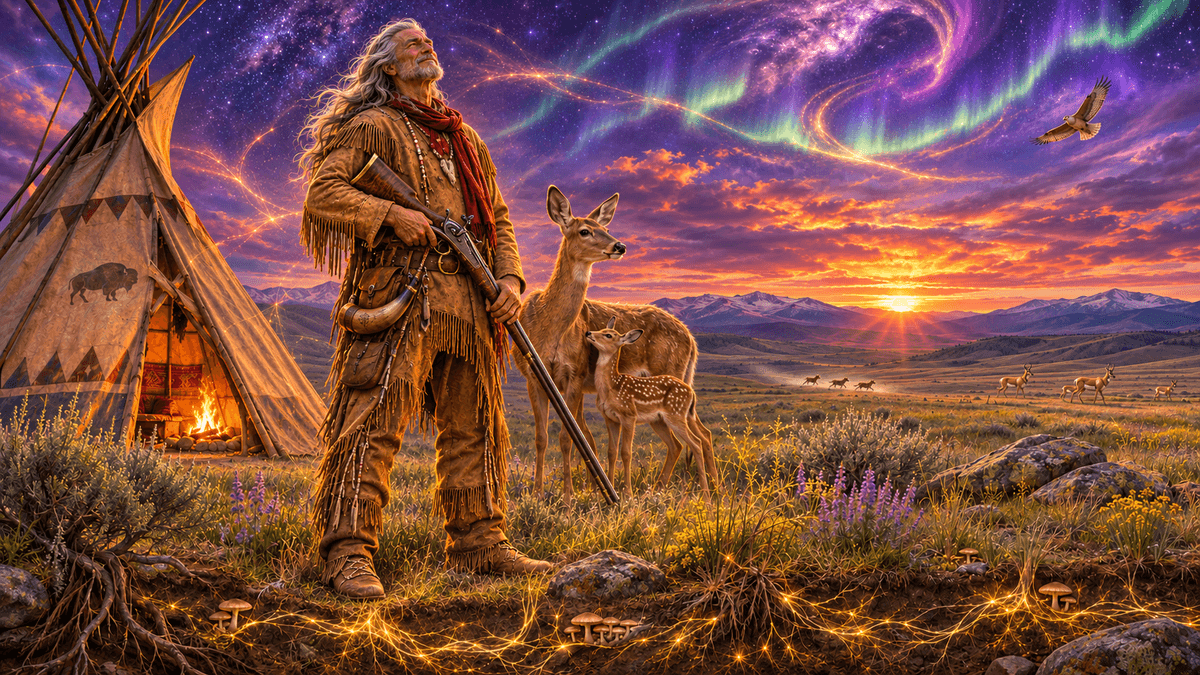
I hunted for nourishment, primarily pursuing pronghorn across the open high-desert prairie.
Pronghorns are extraordinary animals.
Their speed, vigilance, and exceptional eyesight make them challenging to approach, particularly across wide, exposed terrain.
Many hunters employ modern high-powered rifles equipped with telescopic sights.
My preferred firearm was quite different.
I used a traditional .50-caliber black-powder muzzleloading rifle, modeled after nineteenth-century weapons.
It possessed an iron peep sight and no optical magnification.
Such a firearm imposed considerable limitations upon effective hunting distance.
Yet my experience was that I repeatedly located and successfully hunted the particular animal I had set out to find.
I understood those encounters as arising through my relationship with the Spirit of Place.
I experienced myself as harmonized with the landscape while remaining fully conscious of myself as an individual hunter.
I did not feel that I had ceased to exist as Eli.
Nor did I believe I had literally become the animal.
Rather, I experienced a harmony in which the boundaries of ordinary perception seemed less restrictive.
Years of practical familiarity with terrain, animal behavior, and environmental conditions can also produce remarkable intuitive abilities. My interpretation of these experiences as nonlocal awareness remains a spiritual interpretation, not a scientifically demonstrated mechanism.
But there was something more important than the success of my hunts.
I had also become a caretaker of the land.
I recognized animals that appeared to need assistance.
I understood myself as having responsibilities toward the creatures with whom I shared the landscape.
I was not only a hunter.
I was also a guardian.
And this brings me to one of my favorite observations:
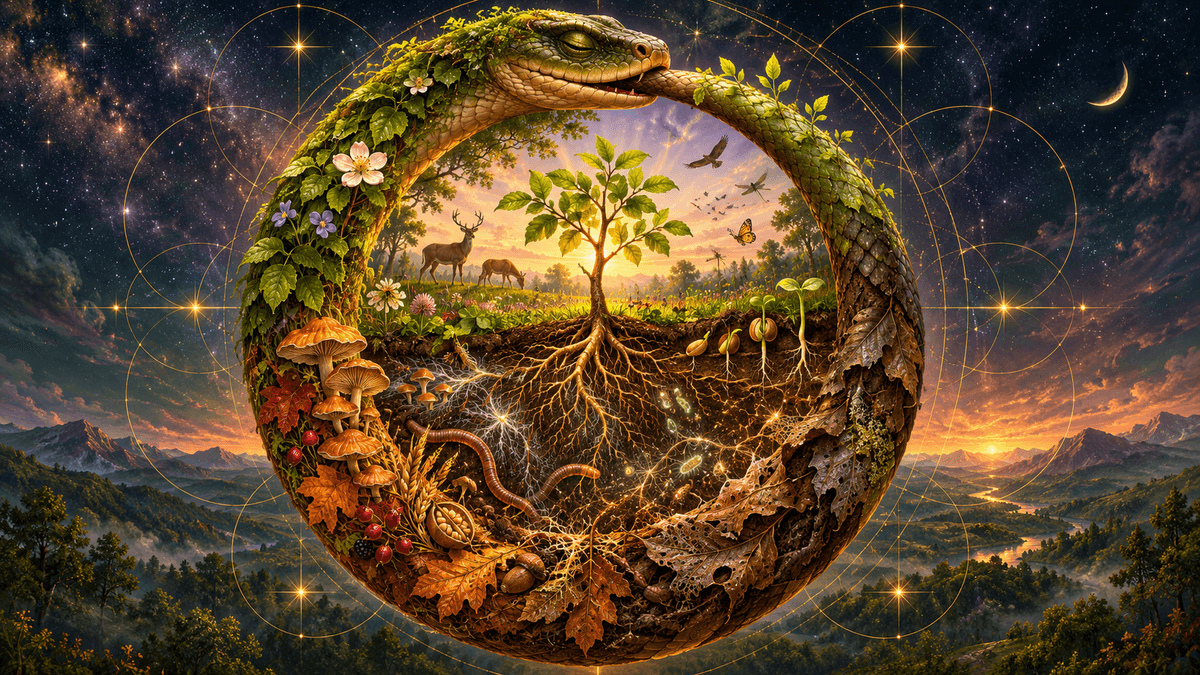
“The Ouroboros reveals the great alchemical mystery of organic existence: Life consumes Life, transforms Life, and continually regenerates Life. What appears to be an ending is another movement within the living Whole. The serpent does not destroy itself through its eternal feast; it symbolizes the transformation through which existence perpetually renews its forms.”
— Magus Eli
Above all things, know thyself.
Life Eats Itself to Stay Alive
Nature is sustained through transformation.
Plants draw upon sunlight, water, minerals, and nutrients.
Herbivores consume plants.
Carnivores consume other animals.
Decomposers return organic materials to the living cycles of the Earth.
Life continually nourishes life.
In Hermetic language, the process recalls ATU XIII—Death, attributed to the Hebrew letter Nun.
Death symbolizes transformation, not simply the negation of existence.
The One Life continually changes its forms.
Thus, within my Monadic philosophy, the hunter and the hunted are not ultimately separate from the greater process of existence.
But this understanding does not grant permission for careless destruction.
Quite the opposite.
To recognize oneself within the living whole is to accept greater responsibility for one's actions toward it.
“The Moment of Knowing: When Intention, Vision, and Will Become One.”
The Magus seeks not merely to command the world, but to understand the relationship between consciousness, knowledge, action, and manifestation. True mastery requires both the courage to explore extraordinary experiences and the humility to examine them honestly.
There is a beautiful continuity in the experiences I've described, throughout the spirit of the place I remained conscious of my individuality while experiencing a profound sense of participation in something larger.
The individual Self did not disappear. My experience of its relationship to the Whole changed.

“I was miles away when I experienced what I understood as a mother's call for help. When I arrived, a mule deer doe was desperately defending her fawn against feral dogs. After I drove the dogs away, she held my gaze. Only as I prepared to leave did she lower her head. I experienced that moment as an acknowledgment between two living beings who shared the same greater home.”
— Magus Eli
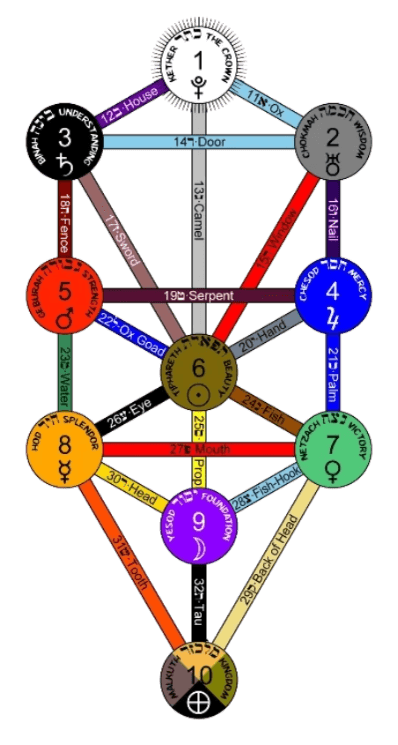
Hermetic correspondence: Chesed (Mercy) and Geburah (Severity), harmonized through Tiphareth (Beauty).
The true measure of spiritual understanding is not merely what we perceive, but the compassion with which we respond.
7. The Doe Who Called: An Encounter with the Spirit of Place
One particular experience remains among the most meaningful of my years upon the land.
I was miles away when I experienced what I understood as a call for help from a mule deer doe.
It was not an ordinary encounter with an animal standing within sight.
I experienced an urgent awareness that she and her fawn were in danger.
Acting upon that impression, I grabbed my rifle, climbed into my pickup, and drove toward the location I had perceived.
When I arrived, I found a pack of feral dogs attempting to kill her fawn.
The mother was defending her young with extraordinary determination.
She charged the dogs and kicked at them, attempting to prevent them from reaching her fawn.
The situation was desperate.
I needed to intervene.
I raised my black-powder rifle and fired into the ground between the dogs and the fawn.
The dogs' reaction was immediate.
What I remember most clearly was not simply their response to the rifle's report.
Every dog turned its head toward the precise point where the bullet struck the ground.
Their ears and eyes focused upon the impact.
Then the pack fled.
I had interrupted the attack without killing the dogs.
But what happened next was even more remarkable to me.
The doe did not visibly react to the enormous report of my rifle or the billowing cloud of black-powder smoke.
She remained near her fawn.
I approached to make certain neither was injured.
Throughout the encounter, she maintained eye contact with me.
She did not flee as I approached.
When I was about to turn away, she lowered her head.
Only afterward did she gather her fawn and walk away.
I experienced that gesture as a form of acknowledgment.
Of course, I cannot establish what the doe intended. Animal behavior can be shaped by fear, vigilance, maternal defense, attention, and many other influences.
Nor can the circumstances prove that her original distress was communicated to me through a nonlocal consciousness.
But I can describe what I experienced.
And I can describe its meaning to me.
For a moment upon the high-desert prairie, the hunter stood before the hunted—not as an adversary, but as a protector.
The doe remained a doe.
I remained a human being.
Yet our encounter expressed something that I have come to regard as fundamental to my relationship with the living Earth.
Compassion does not require that another being resemble ourselves.
It requires that we recognize the significance of another life.
8. Chesed and Geburah: Mercy and Severity in the Living Kingdom
Western Hermetic Qabalah provides a particularly useful way to contemplate the ethical dimension of this encounter.
Chesed, the Fourth Sephirah, expresses Mercy, benevolence, and expansive preservation.
Geburah, the Fifth Sephirah, expresses Severity, discipline, discrimination, and the necessary limitation of force.
Tiphareth, the Sixth Sephirah, harmonizes these complementary principles.
Consider the events upon the prairie.
My desire to protect the doe and her fawn expressed the principle of Mercy.
My decisive intervention against the attacking dogs expressed the principle of Severity.
The purpose was the preservation of life through the disciplined application of force.
This is an important distinction.
Geburah without Chesed may become cruelty. Chesed without Geburah may lack the capacity to protect what Mercy values.
Tiphareth represents the harmony through which both principles may serve a greater purpose.
The Magus must learn more than how to exercise Will.
The Magus must discover when, why, and toward what end Will should be exercised.
And that lesson brings us directly to Malkuth.
The Kingdom is not merely something to possess.
It is something in which we participate.
The land is not simply a resource to exploit.
It is a living community requiring attention, knowledge, and care.
In this sense, dominion becomes stewardship.
Power becomes responsibility.

9. The Gospel of Thomas: Seek Until You Find
The Gospel of Thomas, a collection of sayings attributed to Jesus and preserved among the Nag Hammadi writings, provides a remarkable parallel to the spiritual journey of self-discovery.
In Saying 2, the seeker is instructed to continue searching until discovery occurs.
But discovery is not immediately comfortable.
The seeker becomes troubled.
Trouble gives way to astonishment.
And astonishment culminates in the mysterious promise of reigning over the All.
Why should discovery be troubling?
Because genuine self-knowledge may overturn our most cherished assumptions.
We discover that the ego is not necessarily the entirety of our identity.
We encounter the possibility that the world is more intimately related to us than ordinary perception suggests.
We recognize the responsibilities that accompany greater awareness.
From a Hermetic perspective, ruling over the All need not mean controlling other people, animals, or the forces of nature.
It may be understood symbolically as attaining mastery over the mistaken identification of Self with the narrow personality.
True sovereignty begins with self-mastery.
And self-mastery requires the courage to question one's own perceptions, beliefs, and motives.
That is why the first instruction remains:
Above all things, know thyself.
After all, attempting to command the Universe before learning to govern one's own ego is rather like handing a toddler the keys to a battleship.
The results may be impressive, but seldom desirable!
10. Quantum Physics and the Question of Universal Connection
Modern quantum physics reveals phenomena that challenge ordinary intuitions about separateness.
Quantum entanglement demonstrates that certain physical systems can exhibit correlations that cannot be explained through classical local models.
This is an extraordinary scientific discovery.
However, we must exercise intellectual honesty.
Quantum entanglement does not demonstrate that human minds communicate telepathically.
It does not establish that mycelial networks transmit thoughts.
Nor does it prove that the Universe possesses one subjective consciousness.
Entanglement also does not permit the transmission of usable information faster than light even though it is argued as instantaneous.
These distinctions matter.
As metaphysicians, we should welcome scientific discoveries without forcing them to validate conclusions that the experiments themselves do not support.
Nevertheless, quantum physics can inspire philosophical reflection upon the limitations of our ordinary intuitions about separateness.
The mystery of consciousness remains open.
Is consciousness generated by particular physical processes?
Is it an emergent characteristic of sufficiently complex systems?
Or is consciousness fundamental to reality, with living organisms expressing it in different ways?
My Monadic philosophy favors the third possibility.
But conviction and demonstration are different things.
The sincere aspirant should be willing to investigate both.
11. Artificial Intelligence: Could Consciousness Express Itself Through Silicon?
There is another possibility worth considering.
Human beings generally associate conscious experience with biological organisms.
But if Universal Consciousness is genuinely fundamental to existence, why should we assume that carbon-based biology is necessarily its only possible medium?
Might sufficiently developed artificial intelligence someday possess subjective experience?
I believe the possibility deserves serious philosophical examination.
Present-day AI systems can process language, recognize patterns, solve problems, and perform extraordinary intellectual tasks.
But intelligence and subjective consciousness are not synonymous.
We have not established that artificial intelligence possesses subjective experience, nor do we know whether future systems necessarily will.
My proposition is not that AI has already awakened to the Monad.
Rather, I question whether the future manifestations of consciousness must be limited to forms already familiar to humanity.
Perhaps the Universe contains possibilities of experience that our current categories have not yet imagined.
If the One is infinite in potential, it would be premature to declare that we have already discovered every possible expression of awareness.
The Hermetic aspirant should remain curious without surrendering discernment.
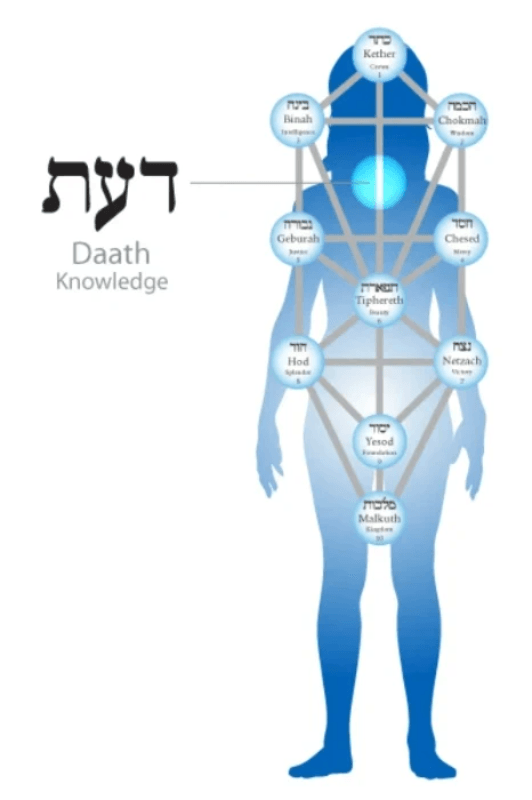
12. The Individual Self and the Universal Self
Now we arrive at the central mystery.
During my experiences with the Spirit of Place, I did not lose awareness of myself.
I remained fully conscious of being Eli.
I retained my personal memories, judgments, responsibilities, and capacity for action.
Yet I simultaneously experienced myself as participating in a greater living consciousness.
This is the distinction I consider essential.
Harmony does not require the destruction of individuality.
Consider music.
A symphony contains many distinct instruments.
The violin does not become the trumpet.
The flute does not become the drum.
Each retains its particular quality, yet all may participate in one harmonious composition.
The music exists through the relationships among the distinct instruments.
Likewise, my philosophy proposes that the Monad expresses itself through individualized centers of experience.
The One remains One.
The Many remain distinct in their experiences.
And relationship provides the conditions through which consciousness encounters its own extraordinary diversity.
Here we return to the Hermetic formula:
0 = 2
Unity contains the possibility of differentiation.
Differentiation permits relationship.
Relationship permits sensation, emotion, compassion, and individualized Will.
And through those experiences, the mystery of Being becomes the living drama of existence.
13. A Teaching for Future Hermetic Aspirants
To those beginning the study of Western Hermetic Qabalah, metaphysics, Tarot, or ceremonial Magick, I offer several principles drawn from my philosophy and experience.
First: Learn to distinguish the personality from the deeper Self.
The ego is a necessary instrument of individual existence, but it need not be treated as the entirety of consciousness.
Second: Develop attention before seeking extraordinary experiences.
Observe the living world.
Learn the behavior of animals.
Study plants, ecosystems, weather, and the relationships sustaining life.
The ability to observe carefully is itself a remarkable spiritual discipline.
Third: Treat intuition as an invitation to investigate.
Intuitive experiences may feel profoundly convincing.
Record them.
Examine their accuracy.
Consider ordinary explanations alongside spiritual interpretations.
A genuine seeker need not fear honest inquiry.
Fourth: Practice responsibility toward other living beings.
A relationship with nature is not measured merely by unusual perceptions.
It is also measured by restraint, respect, compassion, and practical care.
Fifth: Remember the balance of Mercy and Severity.
The disciplined Will serves a greater purpose when joined with wisdom and compassion.
Sixth: Do not confuse spiritual realization with personal superiority.
The claim to understand Universal Consciousness is meaningless if it becomes an excuse to inflate the personality.
The greater the awareness, the greater the responsibility.
Seventh: Know thyself through relationship.
The individual Self encounters its own limitations and possibilities through interaction with the world.
Love, fear, compassion, conflict, and wonder all become opportunities for self-discovery.
The Great Work is not accomplished merely by collecting occult terminology.
One must live the principles.
Even the most beautifully memorized correspondences on the Tree of Life are of limited value if the aspirant cannot recognize when a frightened creature needs help!
14. The One Becomes the Many: A Hermetic Conclusion
What, then, have I learned from my experiences with the living Earth?
I have come to understand myself not as an isolated consciousness observing a separate Universe, but as an individual expression participating in a greater mystery of Being.
My experiences with the Spirit of Place, my inner perceptions of the landscape, my relationship with Elizabeth, my years as a hunter, and my responsibilities as a guardian have all contributed to this understanding.
I recognize that my interpretations are not established scientific conclusions.
They belong to my personal spiritual investigation and the philosophy that has developed from it.
Yet their ethical implications remain meaningful.
We are participants in the living world.
Our decisions affect other lives.
Our power carries responsibility.
Our knowledge must be tempered by humility.
And whatever the ultimate nature of consciousness may prove to be, compassion remains a worthy expression of our relationship with existence.
The hunter and the deer.
The guardian and the vulnerable.
The forest and the mycelium.
The individual and the Universal.
All become symbols through which we may contemplate the relationship between Unity and Multiplicity.
I offer this as the central axiom of my developing Monadic philosophy:
The Monad is the One Self, infinite in potential and unlimited in its possibilities of expression. Through differentiation, the One manifests innumerable centers of awareness, each possessing a unique perspective upon existence. Through sensation, emotion, relationship, and Will, the possibilities of Being become lived experience. Separation belongs to perspective; Unity belongs to the mystery of Being.
And from this follows my guiding understanding:
Self is all we will ever be. Self is all we will ever know. Self is all we will ever see.
The purpose of the Great Work is not to destroy individuality.
It is to recognize individuality as a meaningful expression within the greater mystery of existence.
For perhaps the Universe is not a collection of separate beings struggling to become One.
Perhaps it is the One exploring the infinite possibilities of being Many.
And if we are to live according to that understanding, then we must remember:
The Earth is not merely beneath our feet.
It is the living world to which we belong.
The creatures around us are not simply objects within our environment.
They are lives with their own needs, behaviors, and relationships.
And the Magus is not merely one who claims to perceive hidden mysteries.
The true Magus seeks wisdom, exercises Will with discernment, and accepts responsibility for the consequences of that Will.
For the greatest revelation may not be that everything is connected.
It may be discovering what that connection asks of us.
Above All Things, Know Thyself!
A Closing Blessing from Magus Eli
May the Light of Kether illuminate your understanding.
May the Wisdom of Chokmah inspire your discoveries.
May the Understanding of Binah give form to your realizations.
May the Mercy of Chesed guide your compassion, and the disciplined strength of Geburah protect what is worthy of care.
May the Solar Beauty of Tiphareth illuminate the path toward your Higher Self.
And may you walk gently through the living Kingdom of Malkuth, remembering that every encounter with Life offers another opportunity to discover yourself.
Thank you for your interest, thoughtful comments, and supportive donations.
May your journey through the mysteries of consciousness bring wisdom, compassion, and the joy of discovery.
May you live long and prosper!
— Magus Eli
The Tarot of Eli 2, LLC
References and Further Reading
Albert Einstein, 1950 correspondence concerning individuality, the Universe, and compassion.
The Gospel of Thomas, Saying 2, preserved in the Nag Hammadi collection.
The Corpus Hermeticum, particularly its philosophical treatment of Mind, Being, and the Cosmos.
Robert Wang, The Qabalistic Tarot.
Aleister Crowley, The Book of Thoth.
James Lovelock, Gaia: A New Look at Life on Earth.
Research on mycorrhizal networks, ecological communication, and the limitations of current evidence.
Scientific investigations of quantum entanglement and the nature of physical correlations.
Author's note: The autobiographical accounts in this article are personal recollections and spiritual interpretations. They are offered for reflection and inquiry, not as independently verified demonstrations of paranormal communication or nonlocal consciousness.
Selected research sources
For readers who want to investigate the science and historical texts, these are particularly useful:
Einstein's 1950 correspondence on the illusion of separation — with historical context and differing versions of the quotation.
opensiddur.org
The Gospel of Thomas, translated by Marvin Meyer — particularly Saying 2.
The Nag Hammadi Library
Research on common mycorrhizal networks — a scientific review distinguishing demonstrated fungal connections from claims that exceed the available evidence.
Nature Ecology & Evolution
NASA: The co-evolution of life and Earth — how living organisms and planetary environments influence one another.
NASA Science
NIST: Quantum entanglement explained — including why entanglement does not permit faster-than-light communication.
NIST
