
elitarot2strikingly.com
Above all things, know thyself!
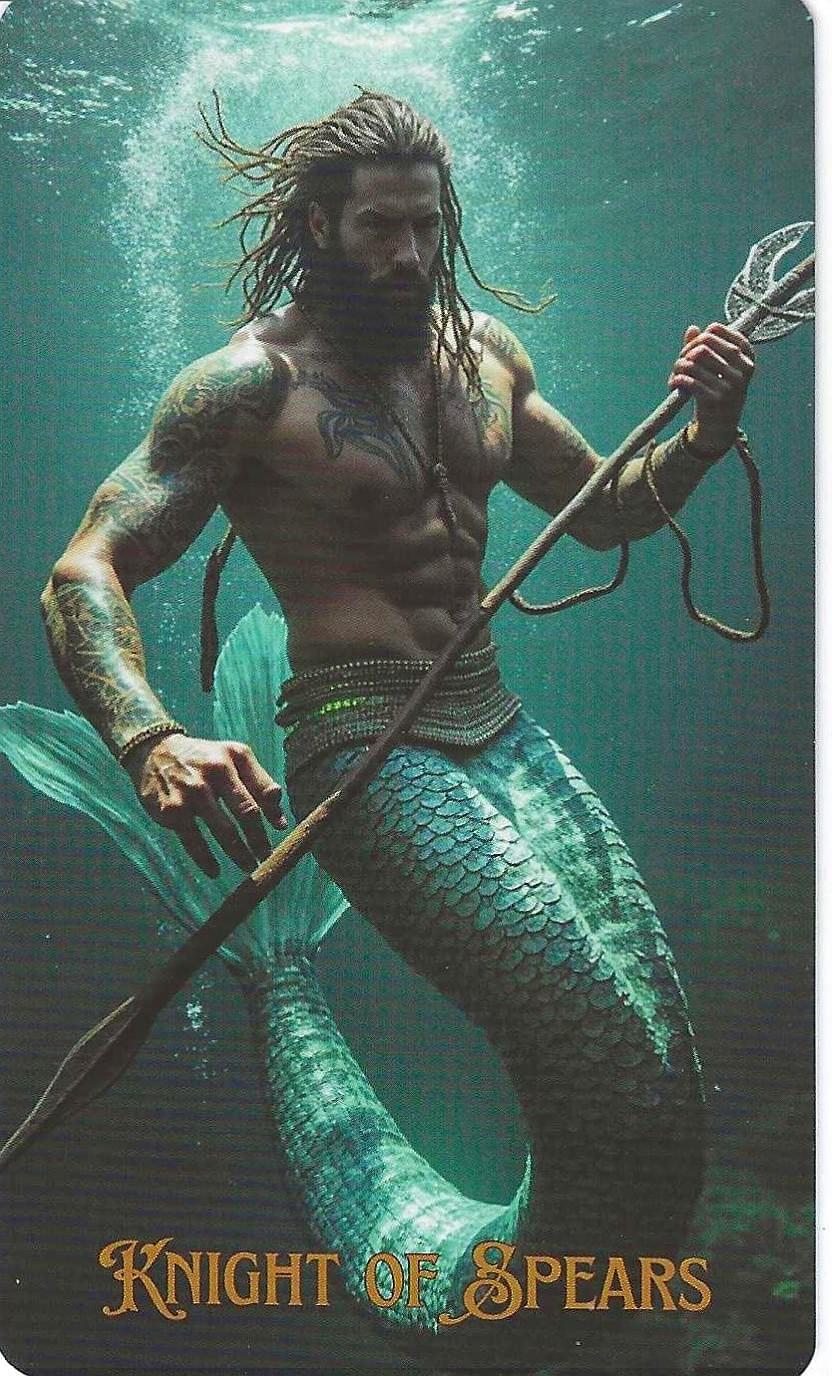
The Ocean Tarot- Knight of Spears
[RWS Tarot Decks, books, and kits, sold in webstore @ elitarot2strikingly.com]
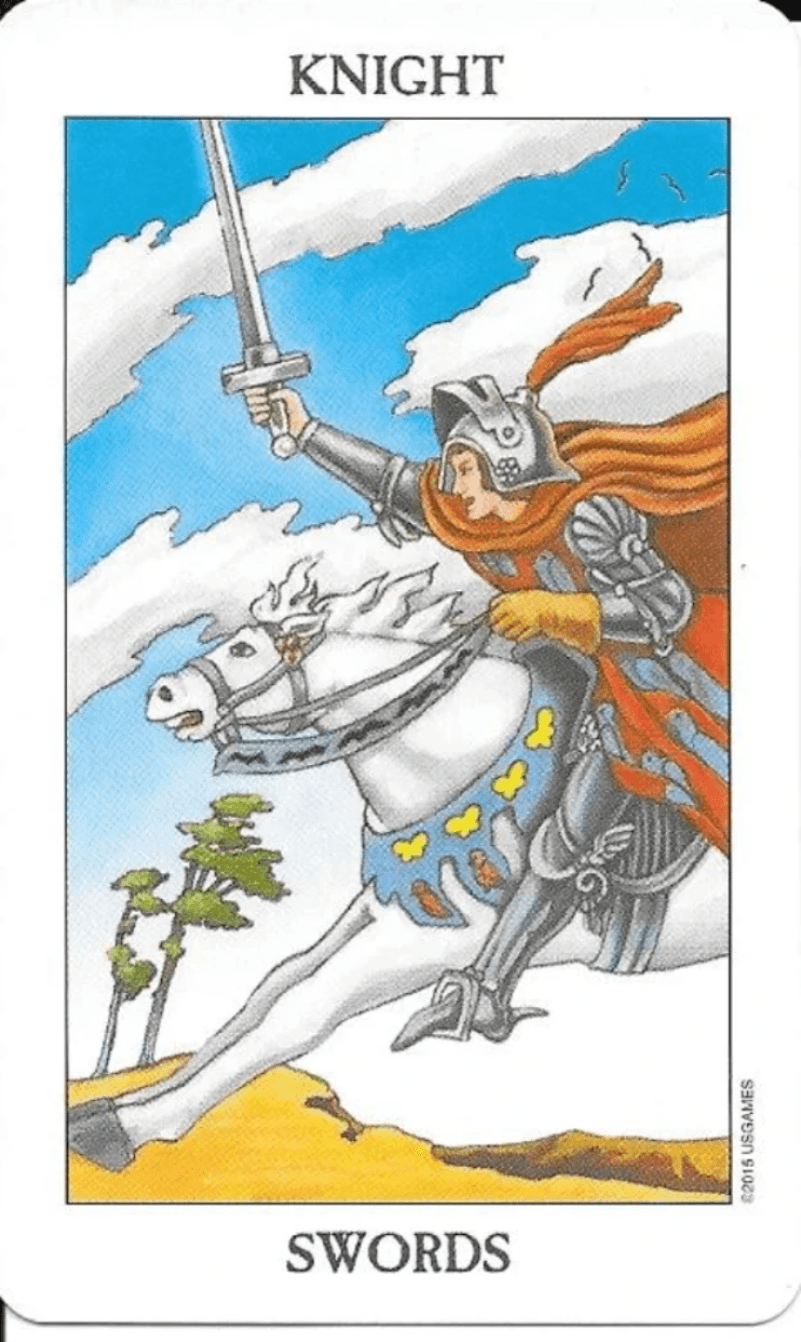
Radiant: Rider-Waite-Smith Tarot- Knight of Swords

Rider-Waite-Smith- Knight of Swords: Radiant edition.
Rider–Waite–Smith Knight of Swords & Ocean Tarot Knight of Spears
The Warrior of Thought — When Intelligence Charges into Battle
Western Hermetic Qabalah, Astrology, Numerology, Metaphysics, Alchemy, and the Art of Knowing Thyself
The Knights: Elemental Forces in Motion
In traditional Tarot, the Knight of Swords represents the restless power of intellect in motion. His closest functional counterpart in the Thoth Tarot is the Prince of Swords, although the court-card titles and elemental hierarchies differ between systems.
In Western Hermetic Qabalah, the Princes are associated with Tiphareth, the Sixth Sephirah, the solar center of Beauty and Harmony upon the Tree of Life. They embody the Vav of the Divine Name YHVH—the Son principle, through which elemental forces are organized into conscious expression.
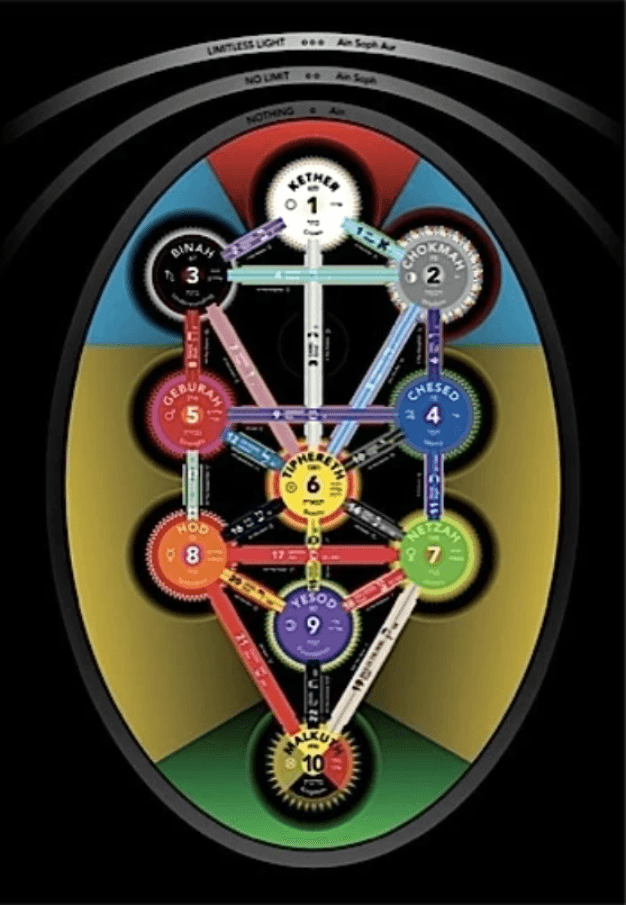
Tiphareth is the harmonizing center of the Tree, where the conflicting powers of Mercy and Severity may be reconciled through the illumination of the Solar Self.
The Knight of Swords illustrates what happens when the intellectual mind attempts to wield this power without first establishing inner equilibrium.
He has the sword, the courage, and the determination. Whether he has identified the correct enemy is another matter entirely!
Rider–Waite–Smith Knight of Swords: The Intellectual Crusader
The Rider–Waite–Smith Knight charges across the landscape upon a galloping horse, his sword raised against an unseen adversary. Wind-whipped trees and turbulent clouds reveal the elemental dominion of Air—thought, language, reasoning, and perception.
The horse symbolizes instinctive and emotional energy carrying the intellect forward. The sword represents discernment, discrimination, and the power to separate truth from illusion.
Together, they portray an individual whose thoughts move faster than their ability to evaluate consequences.
At his best, this Knight demonstrates extraordinary intelligence, courage, decisiveness, and intellectual independence. He confronts injustice, challenges outdated beliefs, and pursues his ideals with remarkable determination.
At his worst, he becomes argumentative, impatient, arrogant, and dangerously certain of conclusions he has barely examined.
He may possess an excellent sword but be somewhat short on targets worthy of stabbing.
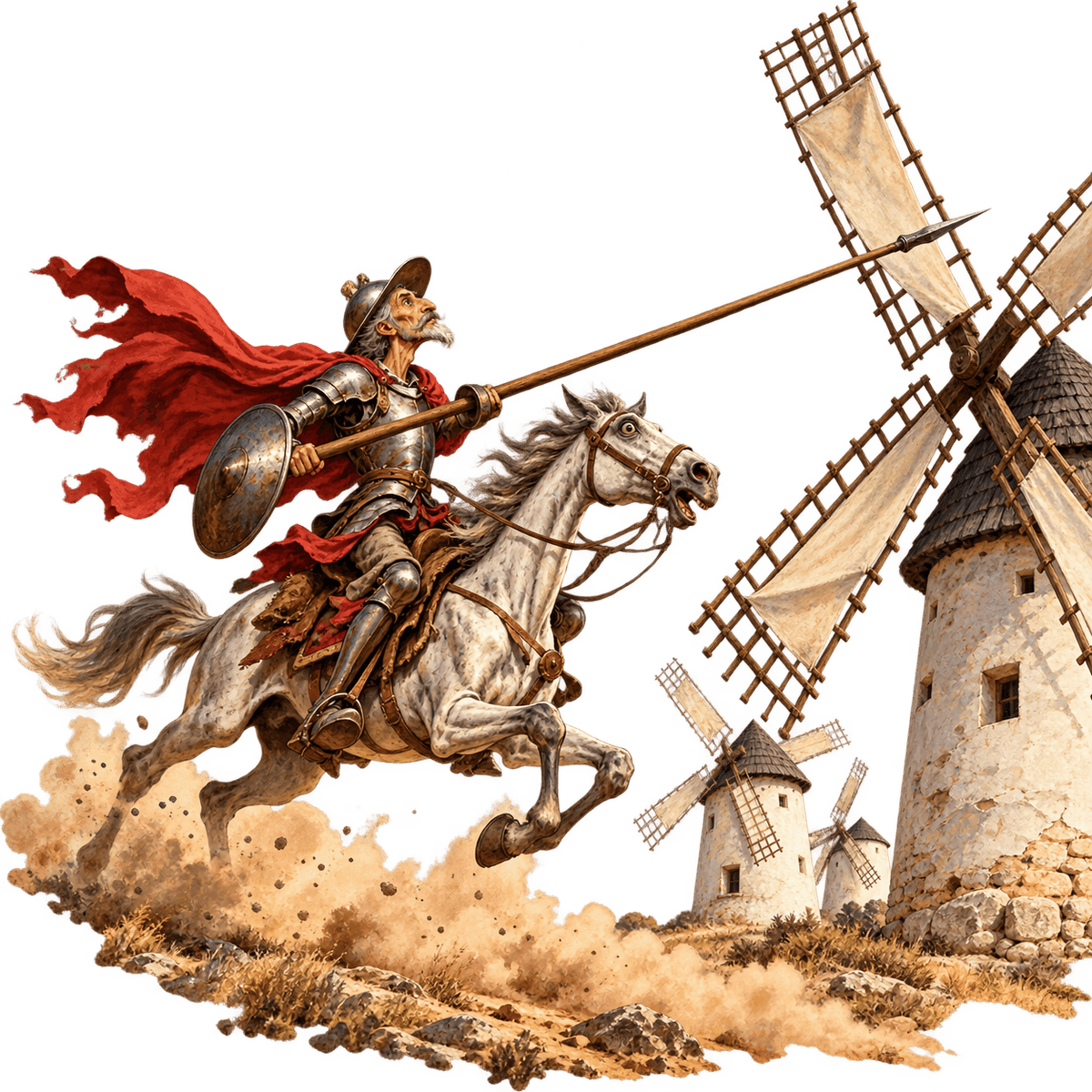
Don Quixote: Tilting at the Windmills of the Mind
Miguel de Cervantes' Don Quixote provides an excellent psychological parallel to this Knight.
In the famous episode, Don Quixote mistakes ordinary windmills for monstrous giants. Ignoring the sensible warnings of Sancho Panza, he charges into battle, only to discover that conviction does not necessarily establish reality.
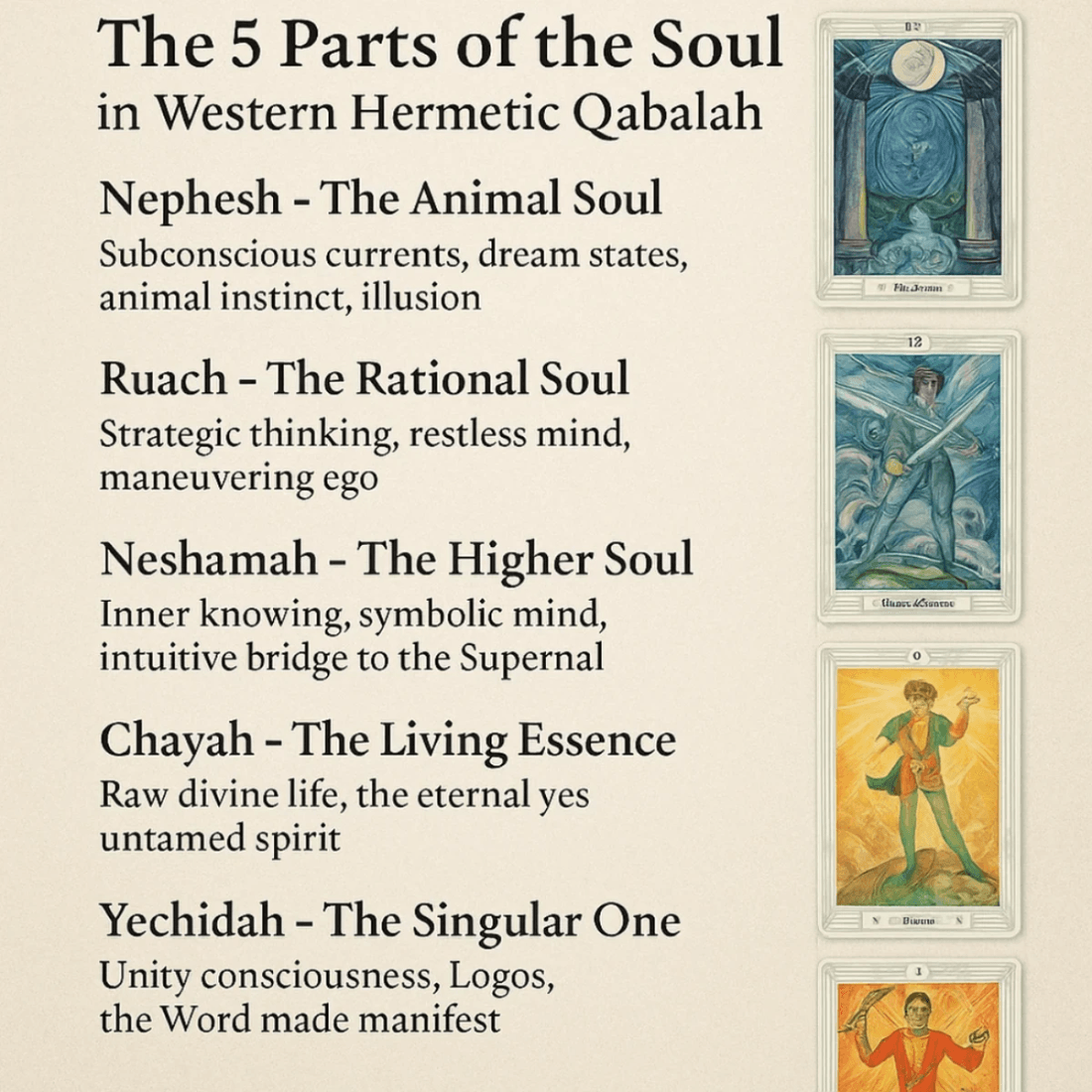
In Western Hermetic psychology, this illustrates the Ruach—the reasoning and self-conscious mind—operating without sufficient discernment or guidance from Neshamah, the higher understanding.
The windmills become symbols of unconscious projections: fears, expectations, and imagined enemies mistaken for objective circumstances.
From a parapsychological perspective, this can be understood as the projection of subconscious imagery onto external experience. The mind responds not merely to events, but to the meanings, memories, and emotional associations imposed upon them.
Such projection is a recognized psychological phenomenon; interpreting it as an external psychic influence requires separate evidence.
This is the Knight's central initiation: learning to distinguish what is actually happening from what his conditioned personality insists must be happening.
The mind can manufacture an enemy as easily as it manufactures an argument.
And nobody wins a war against a windmill—except, perhaps, the windmill.
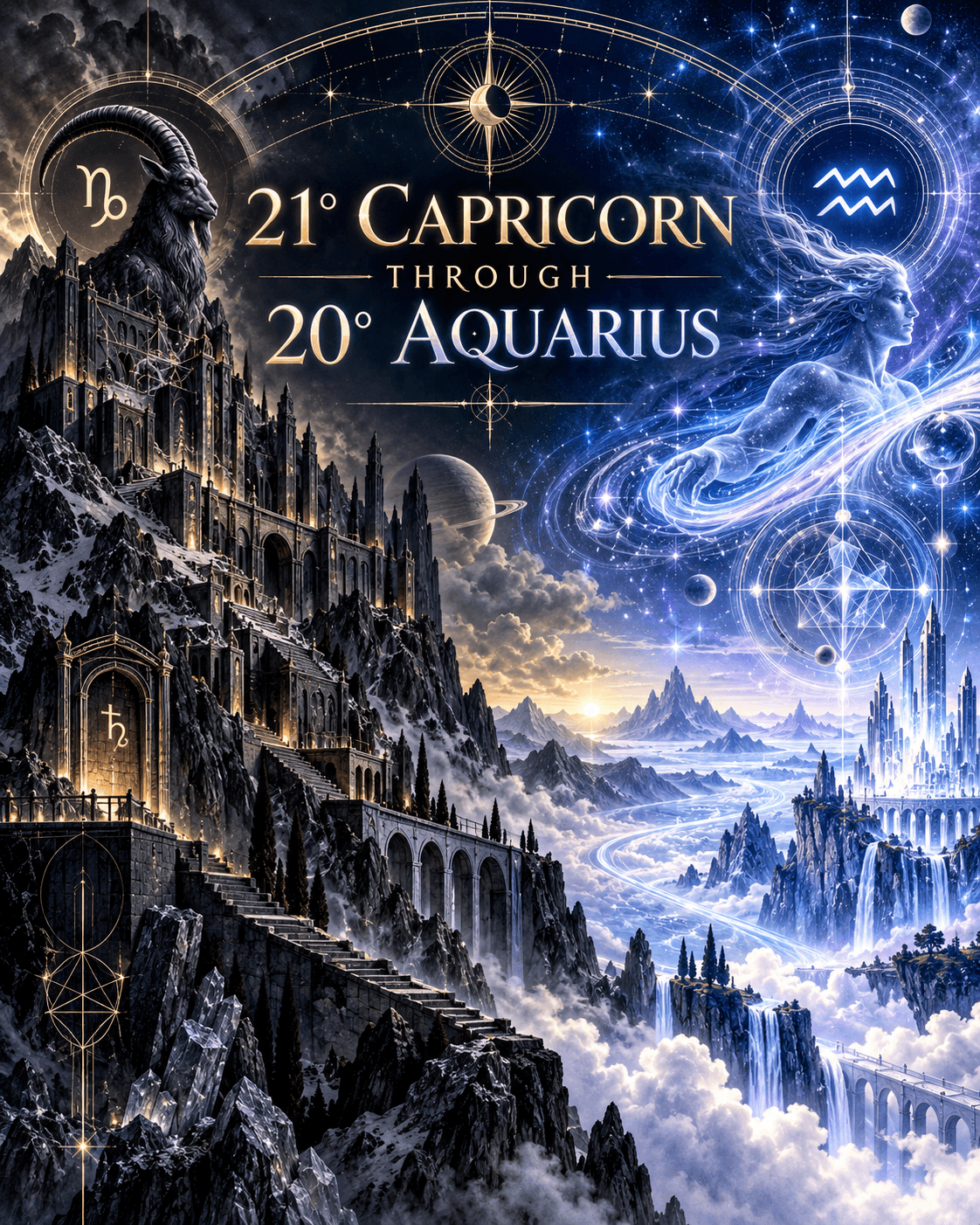
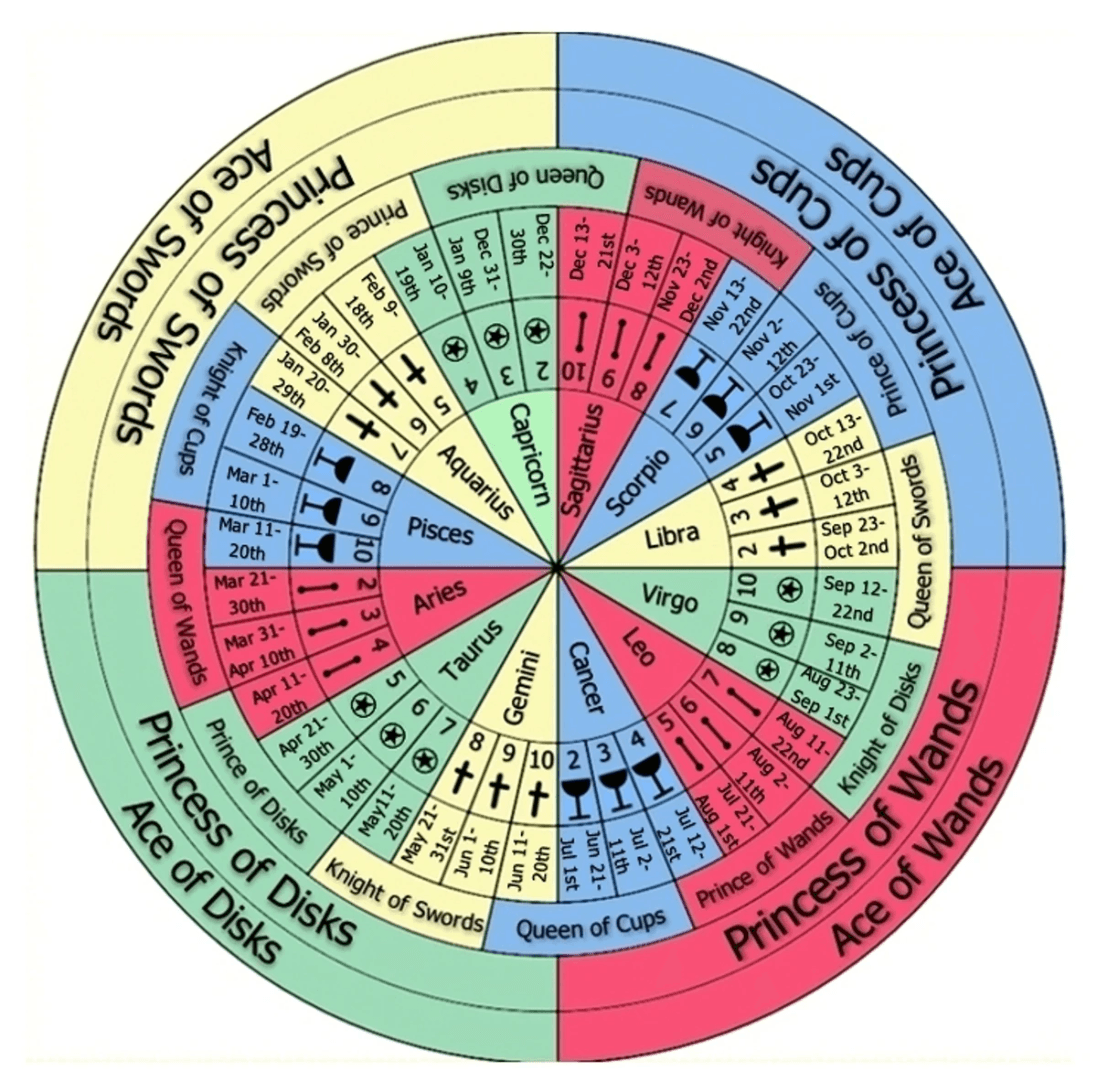
Astrology: 21° Capricorn Through 20° Aquarius
In the Thoth Tarot, the Prince of Swords is attributed to the final ten degrees of Capricorn and the first twenty degrees of Aquarius.
This zodiacal region combines three decans:
21°–30° Capricorn: Sun in Capricorn, emphasizing ambition, authority, and the determination to establish order.
1°–10° Aquarius: Venus in Aquarius, introducing ideals, relationships, intellectual independence, and questions of social harmony.
11°–20° Aquarius: Mercury in Aquarius, promoting inventive reasoning, communication, analysis, and scientific understanding.
These are the traditional Golden Dawn decanary correspondences. The boundaries are also commonly expressed as 20° Capricorn through 20° Aquarius in modern degree notation.
Both Capricorn and Aquarius are traditionally ruled by Saturn, whose symbolic function is structure, limitation, responsibility, and disciplined mastery. Modern astrology also associates Aquarius with Uranus, representing disruption, originality, and sudden revelation.
Thus, the Prince combines Saturnian structure with Aquarian intellectual independence.
The challenge is to unite discipline with innovation rather than becoming trapped between rigid certainty and perpetual rebellion.
The Knight's greatest weapon is not his aggressive thinking; it is his capacity to organize thought into purposeful action.
Air of Air: Mind Contemplating Mind
In the Thoth system, the Prince of Swords is Air of Air—the intellectual aspect of the intellectual element.
This is the mind examining its own creations.
It can generate remarkable philosophical arguments, ingenious inventions, and entirely new systems of understanding. Yet the same faculty may endlessly dismantle its own conclusions.
One moment, the Prince brilliantly defends an idea; the next, he brilliantly destroys it.
He may then congratulate himself on winning both arguments!
This is intelligence without an established center of direction.
When disconnected from practical experience, reasoning can become an elaborate arrangement of abstractions that no longer correspond to reality.
Such personalities may become fascinated with movements, philosophies, political causes, religions, or artistic fashions, only to abandon them when another stimulating idea appears.
However, when illuminated by Tiphareth, this intellectual instability can become remarkable creativity, flexibility, and enlightened discrimination.
The objective is not to stop thinking. It is to develop a conscious relationship with thought.
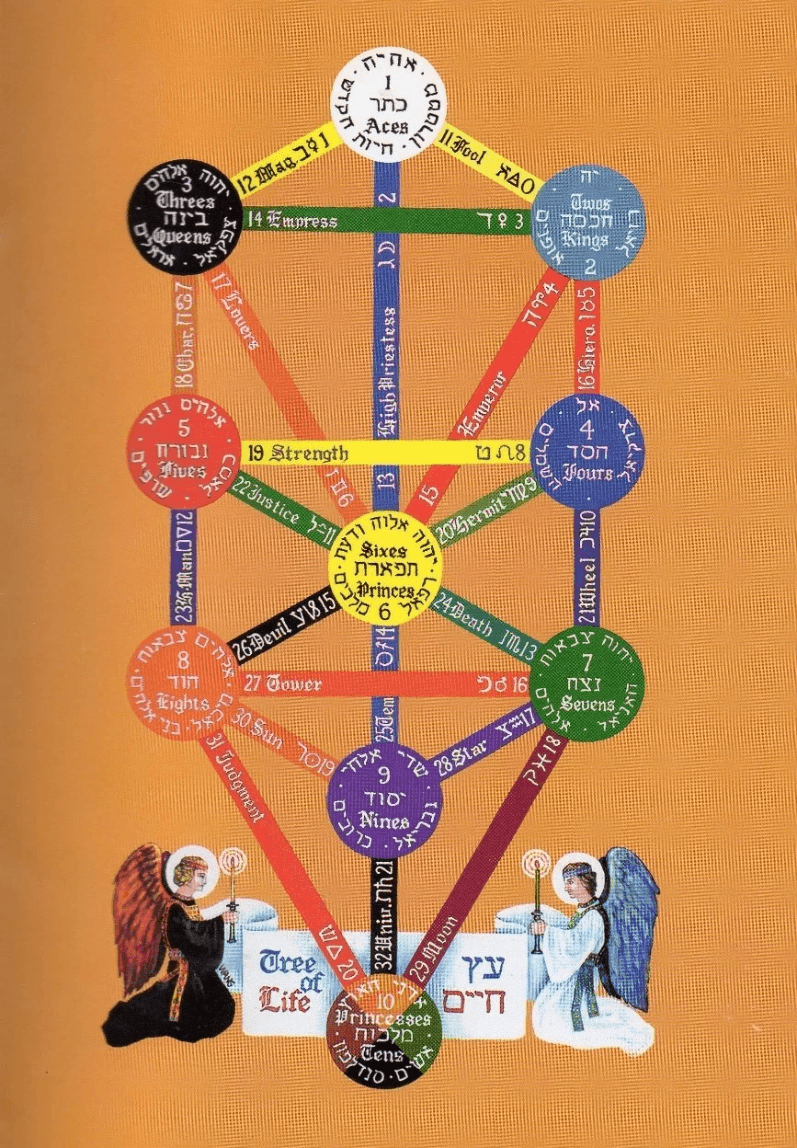
Tiphareth and the Number Six: The Solar Center
The number Six represents Tiphareth, the Sephirah of Beauty, Harmony, and the mediating Solar Intelligence.
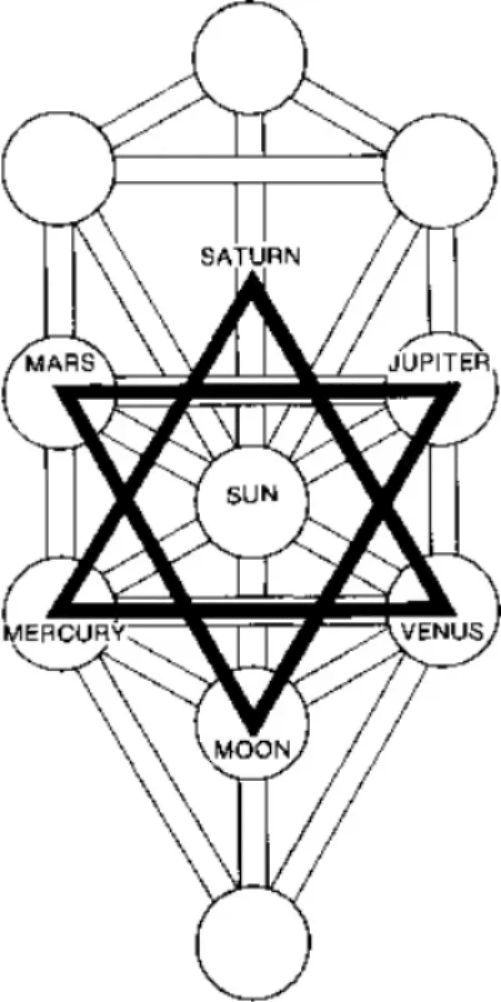
The geometrical figure of six is the hexagram—two interpenetrating triangles expressing the reconciliation of complementary forces.
Within Hermetic symbolism, these triangles may represent Fire and Water, Above and Below, Spirit and Matter.
The hexagram also illustrates the balanced interaction of the planetary powers around a solar center.
In the Qabalistic numerical scheme, Six signifies the harmonization of forces that would otherwise remain antagonistic.
For the Knight of Swords, Tiphareth provides a crucial correction:
Intelligence becomes wisdom when it serves the conscious center rather than the defensive personality.
The sword of discrimination must be guided by the illumination of the Solar Self.
Otherwise, intellectual brilliance becomes another sophisticated instrument of self-deception.
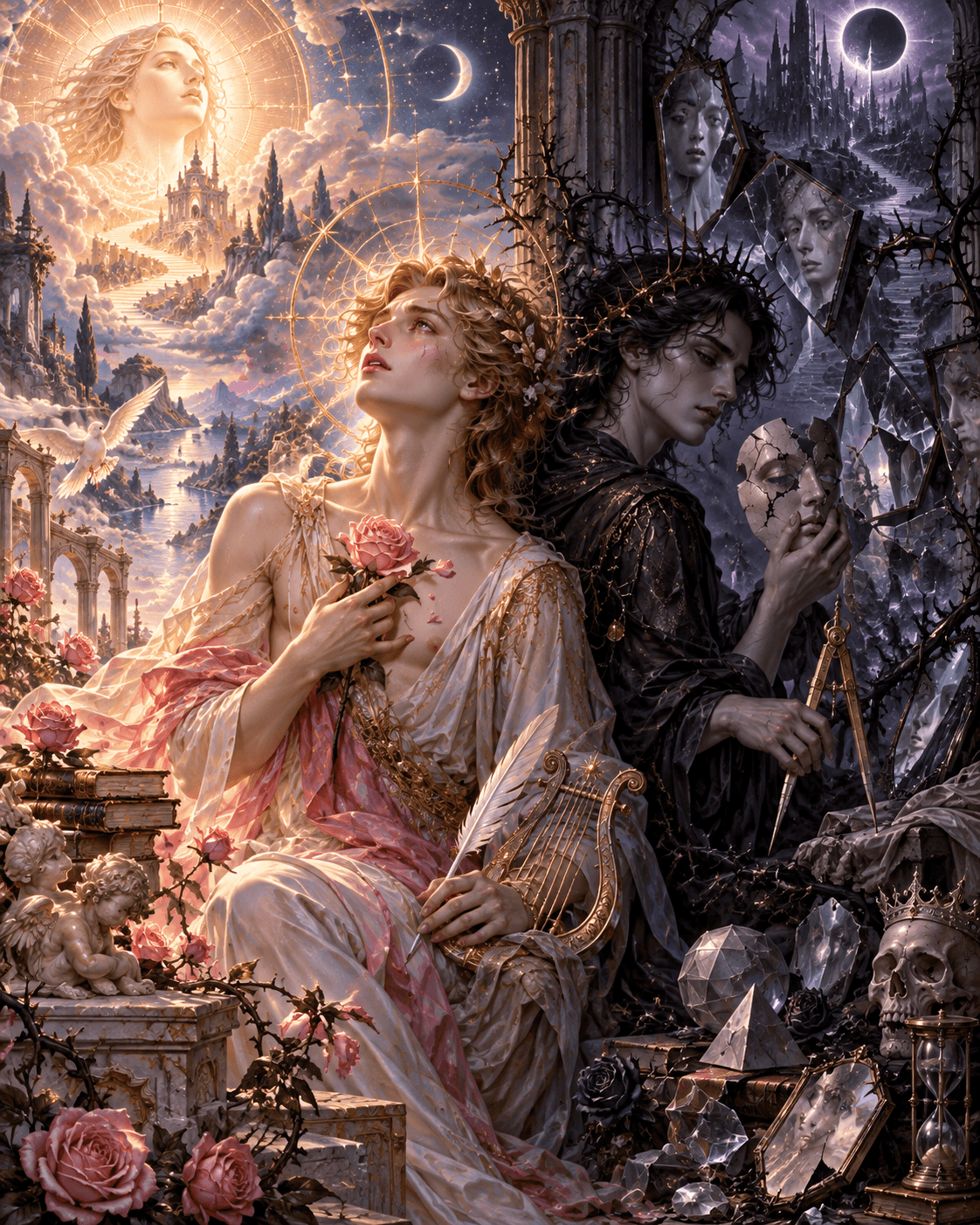
The Romantic Idealist and the Shadow of Perfection
The Knight of Swords can also appear as a charming, imaginative, and intensely romantic personality.
Beneath the warrior's armor may dwell a poet, musician, visionary, or dreamer who perceives beauty and possibility where others see only ordinary circumstances.
Such individuals may pursue extraordinary artistic or humanitarian ideals. Their imaginations provide refuge from a world they consider coarse, unimaginative, or unjust.
Yet their greatest difficulty may be accepting that human beings seldom conform to idealized expectations.
They may fall in love with possibilities rather than people, become wounded by disappointment, and withdraw into private worlds of imagination.
Some are combative, while others avoid confrontation until circumstances force them to react. These seemingly contradictory expressions share a common tendency: thought and imagination can overpower immediate reality.
The problem is not idealism itself but the refusal to reconcile ideals with experience.
Hermetically, this is the need to integrate the imaginative powers of Yesod with the discriminating intellect of Hod, the emotional intelligence of Netzach, and the harmonizing consciousness of Tiphareth.
When these functions cooperate, imagination becomes creative vision rather than escapism.
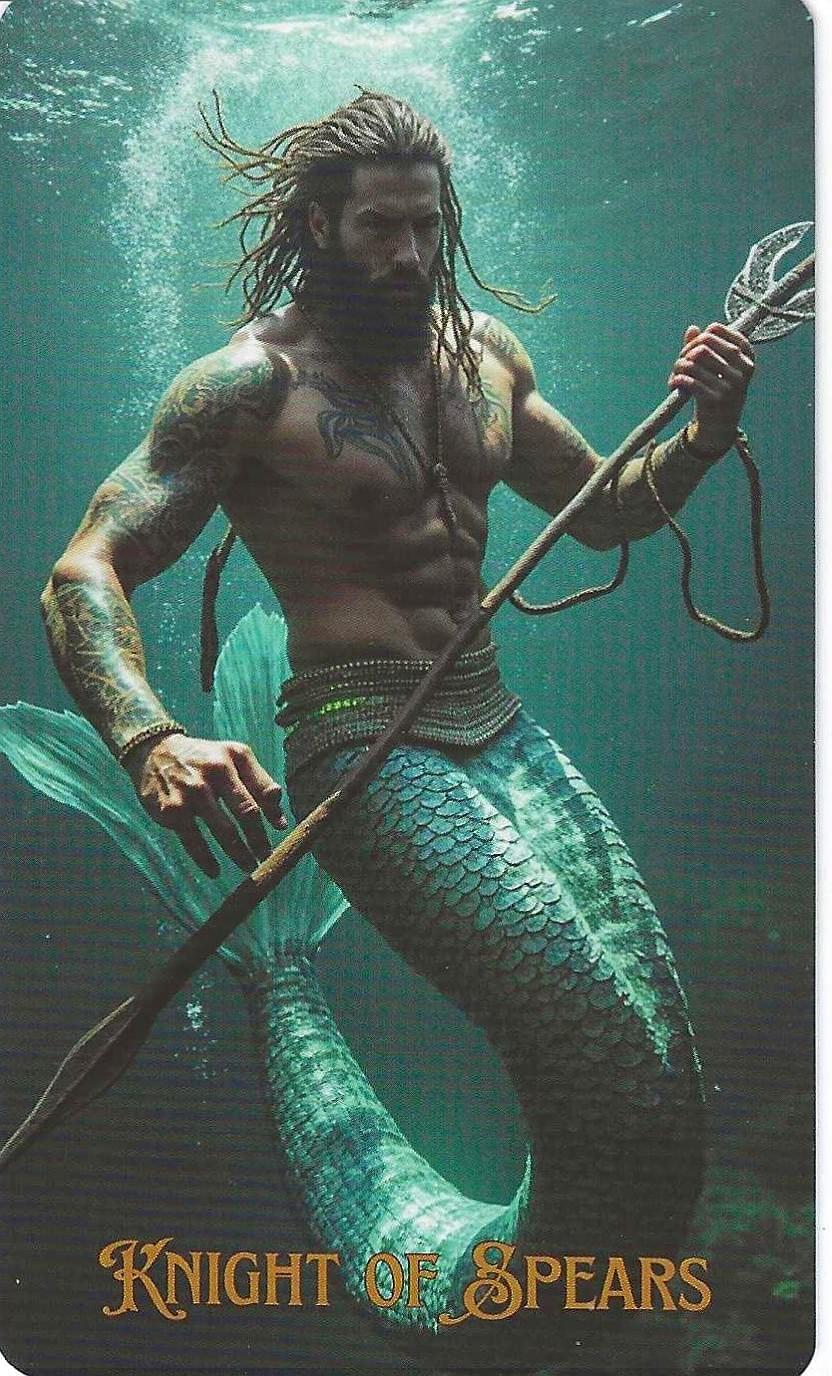
Ocean Tarot Knight of Spears: The Warrior Beneath the Waves
The Ocean Tarot replaces the galloping medieval horseman with a formidable merman warrior carrying a powerful trident.
His expression is determined, his weapon ready, and his movement through the water suggests strength, experience, and immediate action.
Where the Rider–Waite–Smith Knight charges through the winds of thought, the Ocean Knight advances through the waters of emotion and subconscious imagery.
Nevertheless, Spears correspond to Swords and retain the elemental attribution of Air. The surrounding ocean modifies the symbolism; it does not change the underlying suit.
The water invites us to contemplate the relationship between rational judgment and emotional experience.
The merman symbolizes an intellect operating within the depths of feeling and subconscious conditioning.
The trident, interpreted as a threefold instrument of power, can suggest the harmonious relationship of thought, emotion, and action—or their division when the personality becomes unbalanced.
The three prongs may also be used meditatively to represent the Hermetic triad of Sulfur, Mercury, and Salt: dynamic Will, mediating intelligence, and embodied manifestation. This is a symbolic interpretation rather than a fixed correspondence of the Ocean deck.
This Knight represents rapid developments, assertiveness, courage, ambition, and the willingness to seize opportunity.
Properly directed, he is the decisive hero who acts when others hesitate.
Ill-defined, he becomes sarcastic, aggressive, reckless, domineering, or convinced that nobody else possesses an intelligent thought.
In short, he may be extremely courageous but occasionally mistake being loud for being right.
The Alchemy of the Sword: Solve et Coagula
The Knight of Swords expresses the alchemical operation of separation.
His sword performs Solve—dissolving obsolete beliefs, dismantling false conclusions, and cutting through intellectual confusion.
However, separation alone does not accomplish the Great Work.
The complementary operation, Coagula, requires integrating what has been learned into a stable and functional expression.
Without this second operation, the Knight becomes an endless destroyer of concepts, forever replacing one mental construction with another.
His intellectual alchemy requires:
Discernment without cruelty.
Imagination without self-deception.
Courage without recklessness.
Rational intelligence balanced by intuition.
Action directed by conscious Will.
In Hermetic practice, the objective is not merely to conquer an opposing idea but to liberate consciousness from identification with its own mental productions.
The sword must cut the chains of illusion, not the person wearing them.
Divination: Rider–Waite–Smith Knight of Swords and Ocean Knight of Spears
When well-defined or upright:
Sudden opportunities, rapid developments, travel, arrivals, or departures.
Intellectual courage, strategic thinking, and decisive action.
Creative breakthroughs and the determination to overcome obstacles.
Honest communication and a willingness to challenge false assumptions.
Strong business judgment when intelligence is supported by practical discipline.
The need to focus mental energy upon a clearly established objective.
When ill-defined or reversed:
Impulsiveness, impatience, argumentativeness, and unnecessary confrontation.
Reacting before understanding the circumstances.
Intellectual arrogance, sarcasm, bullying, or harsh communication.
Excessive dependence upon the opinions or expectations of others.
Romantic idealization, disappointment, or retreat into fantasy.
Missed opportunities through distraction, hesitation, or reckless decisions.
Brilliant reasoning disconnected from emotional intelligence and practical reality.
A reversed interpretation may apply when working with the Rider–Waite–Smith or Ocean Tarot. In Thoth-based divination, these challenging characteristics are generally evaluated through the card's surrounding influences rather than physical reversal.
The Hermetic Lesson: Master the Mind Before Charging into Battle
The Knight of Swords and Knight of Spears teach that thought is a magnificent instrument but an unreliable sovereign.
The conditioned personality frequently mistakes its beliefs for truth, its fears for warnings, and its emotional projections for external enemies.
In Western Hermetic Qabalah, the work of self-knowledge requires recognizing these distortions without surrendering the creative brilliance that produced them.
Tiphareth represents the Solar equilibrium capable of bringing the conflicting tendencies of the personality into harmony.
The Knight must therefore learn to pause long enough to ask:
Am I acting from clear knowledge, or am I defending a story created by my own mind?
The enlightened Knight does not lose his courage, imagination, or intellectual fire. He simply learns to place these powers in the service of conscious Will.

For the Magus, this is the distinction between being ruled by thought and becoming its master.
Above all things, know thyself!
And before charging into battle, make certain the giant is not a windmill. Even a magnificent sword cannot defeat poor perception.
Thank you for spending some time exploring the Tarot with me. Your interest, thoughtful comments, and supportive donations are deeply appreciated and help keep this work growing. May wisdom light your path, may prosperity walk beside you, and—as always—may you live long and prosper.
3 Western Hermetic Tarot and Magick websites helping people become more magick and less tragic since 2010.
Traditional Tarot Card Comparisons blog and tarot deck and bookstore.
Home page, Tarot Store, Master Thoth Tarot Classes, Tarot decks, tarot books, and nontraditional Tarot Card Comparisons.
Western Hermetic Magic ritual and invocation website and blog.
